Prenatal Yoga: Why Group Classes Can Be Risky and 1:1 Makes Sense (Part 3)
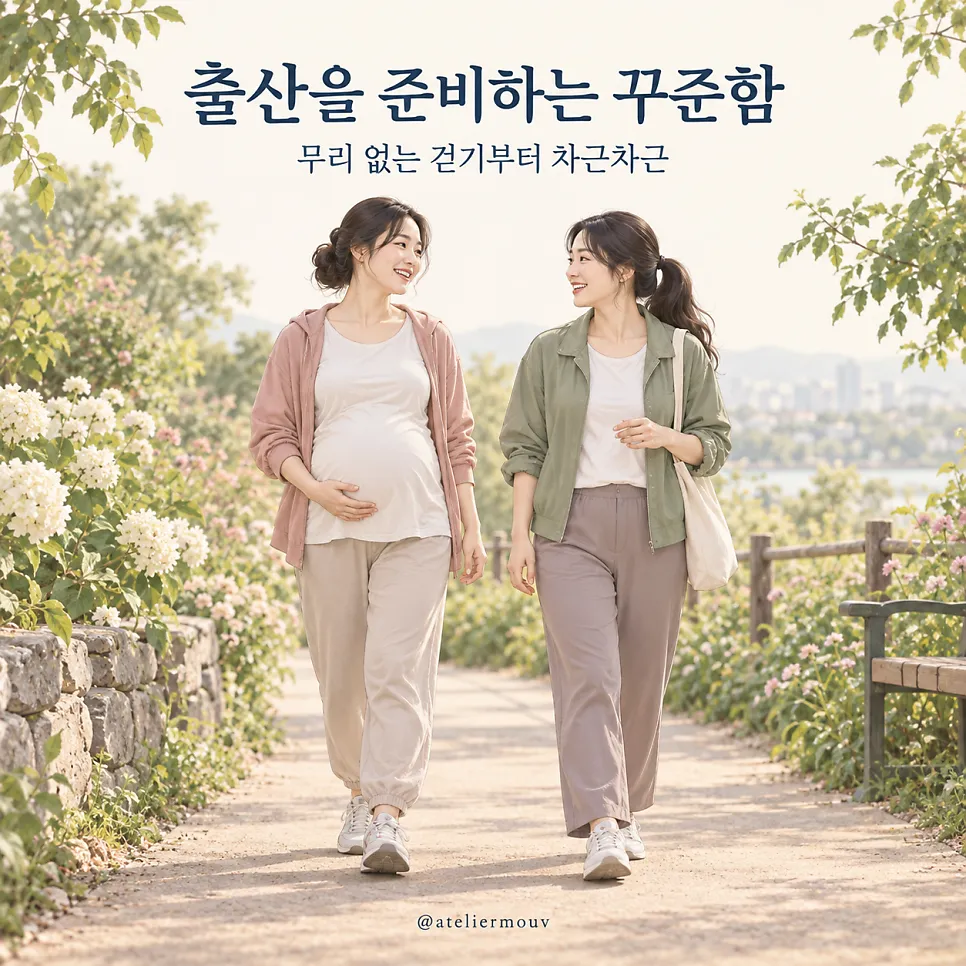
“Be careful while you’re pregnant. Exercise can wait until after the baby comes.”
Many women, especially after IVF or IUI, have avoided exercise during pregnancy. Yet the conclusion of obstetric research is exactly the opposite. If your doctor has said it is fine to exercise, or if you were already exercising when you became pregnant, exercise is not something to be wary of but something recommended. What kind of exercise you do, and how, makes a big difference to the benefits during pregnancy and after birth. Many people choose prenatal yoga for stretching. But the group-class format has more limits than you might expect.
I used to teach pre-pregnancy Pilates and yoga classes at a department-store culture centre. What I noticed then was that participants’ condition varied enormously, so light stretching was about all everyone could do together. Now and then I suggested extra exercise to those who were fit, and to those who struggled even to follow the group class I carefully recommended private lessons.
How exercise supports a woman through childbirth and raising a child makes a big difference to her recovery afterwards. It shapes her quality of life well into later years, too.
Why fitness matters during pregnancy
Pregnancy is a 40-week endurance event. You gain around 10 kg, your heart rate and blood volume rise, and in the third trimester you wait for the birth with a heavier body and too little sleep. As the birth approaches, your body feels more and more cramped, and the baby shares that discomfort. The moment of birth itself demands enormous stamina. Recovery after birth also differs clearly between those who exercised and those who didn’t.
I can only speak from my own years of teaching, and since I might doubt whether my impressions are right, I looked for research and verified sources.
The American College of Obstetricians and Gynecologists (ACOG, 2020, Committee Opinion No. 804) recommends at least 150 minutes a week of moderate-intensity aerobic exercise for pregnant women without complications, and states that women who did not exercise before pregnancy should be encouraged to start during it. Among pregnant women who exercise, it notes a tendency toward less gestational diabetes, fewer caesarean births and shorter postpartum recovery, and says exercise can be an important factor in preventing postpartum depression.
The World Health Organization’s physical activity guidelines (WHO, 2020) addressed pregnant and postpartum women as a separate group for the first time, with the same 150-minutes-a-week benchmark. They state that regular physical activity helps manage blood pressure and blood sugar, limit excessive weight gain and reduce the risk of delivery complications and postpartum depression, and recommend combining strength training and stretching while cutting down time spent sitting.
On the pelvic floor, a Cochrane systematic review (Woodley et al., 2020) concluded that pelvic floor muscle training started during pregnancy may help reduce the risk of urinary incontinence in late pregnancy and after birth. Given that about one in three women experiences urinary incontinence after giving birth, becoming aware of your pelvic floor during pregnancy is not optional but essential.
Research specific to yoga in pregnancy has also built up. An overview of multiple systematic reviews (Villar-Alises et al., 2023) reported that prenatal yoga was more effective than control conditions at reducing symptoms of anxiety, depression and stress during pregnancy, and a meta-analysis of randomised controlled trials from the past five years (Int J Yoga, 2025) also found that prenatal yoga reduced anxiety.
In short, exercise during pregnancy can help with blood sugar, weight, the pelvic floor and mental health, and it is the surest investment in preparing for birth and recovery. But all of this research assumes exercise that is adjusted to your body.
That is where the case for 1:1 begins.
Your body changes every week during pregnancy
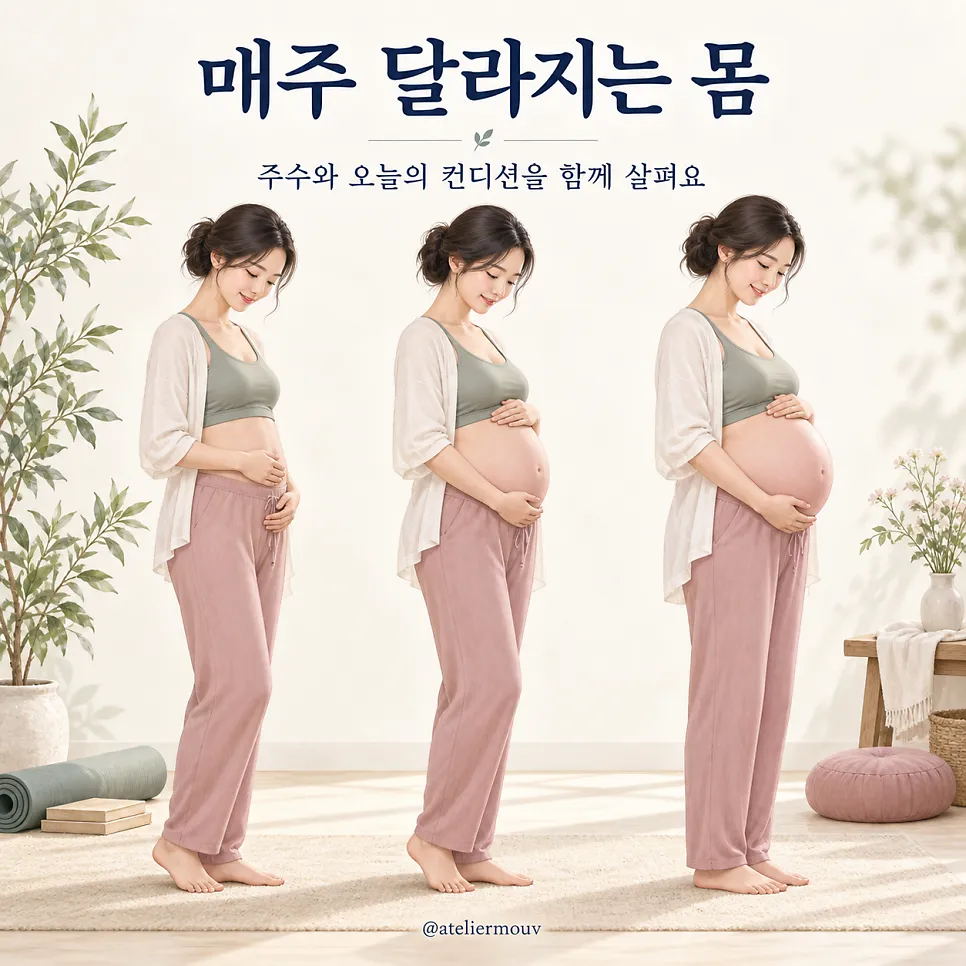
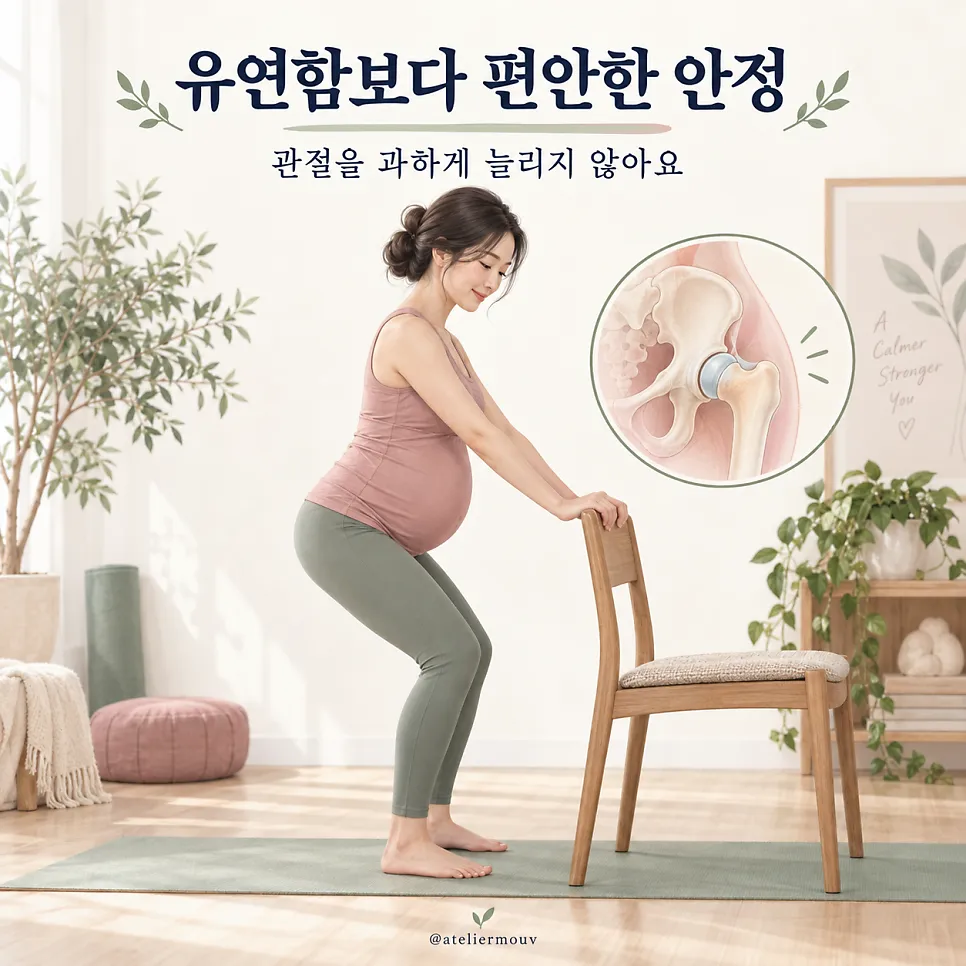
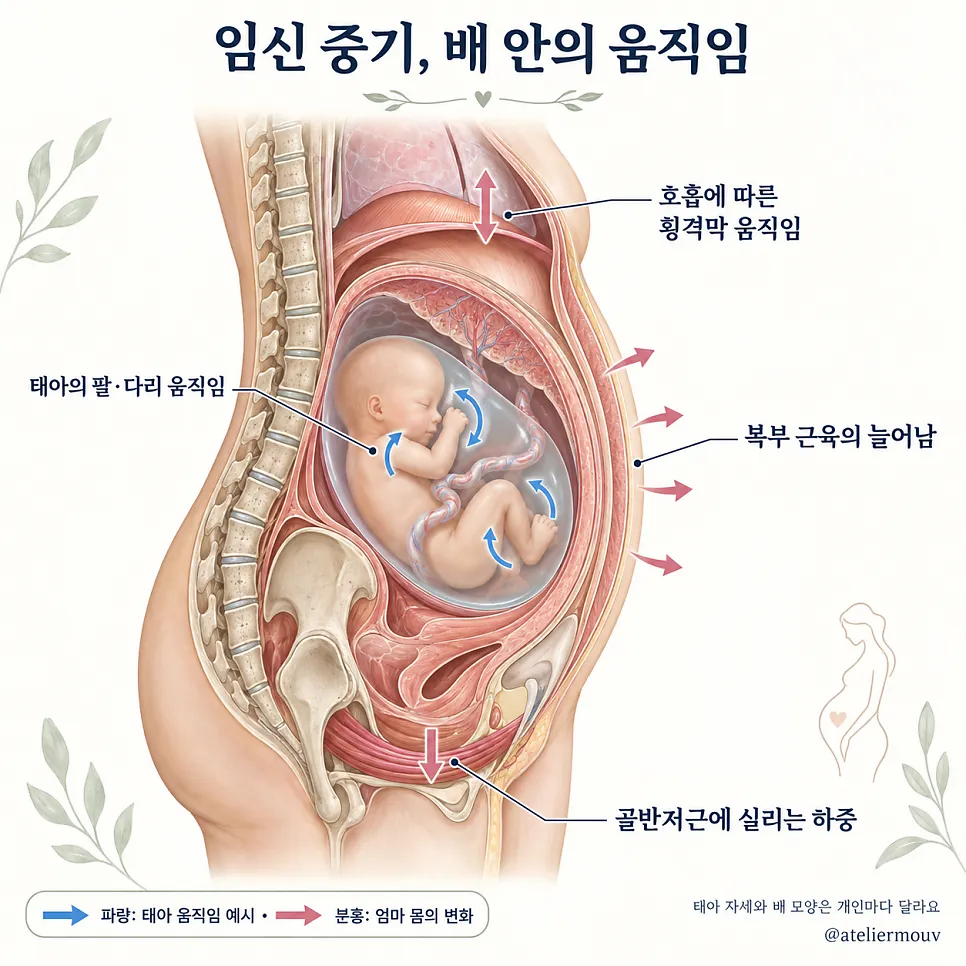
First, the joints loosen. The hormone relaxin softens the ligaments to prepare for birth. That is why you may feel more flexible than usual during pregnancy, but this is not a good sign. When joints move beyond the range the ligaments can support, pain develops in the pelvis and sacroiliac joints.
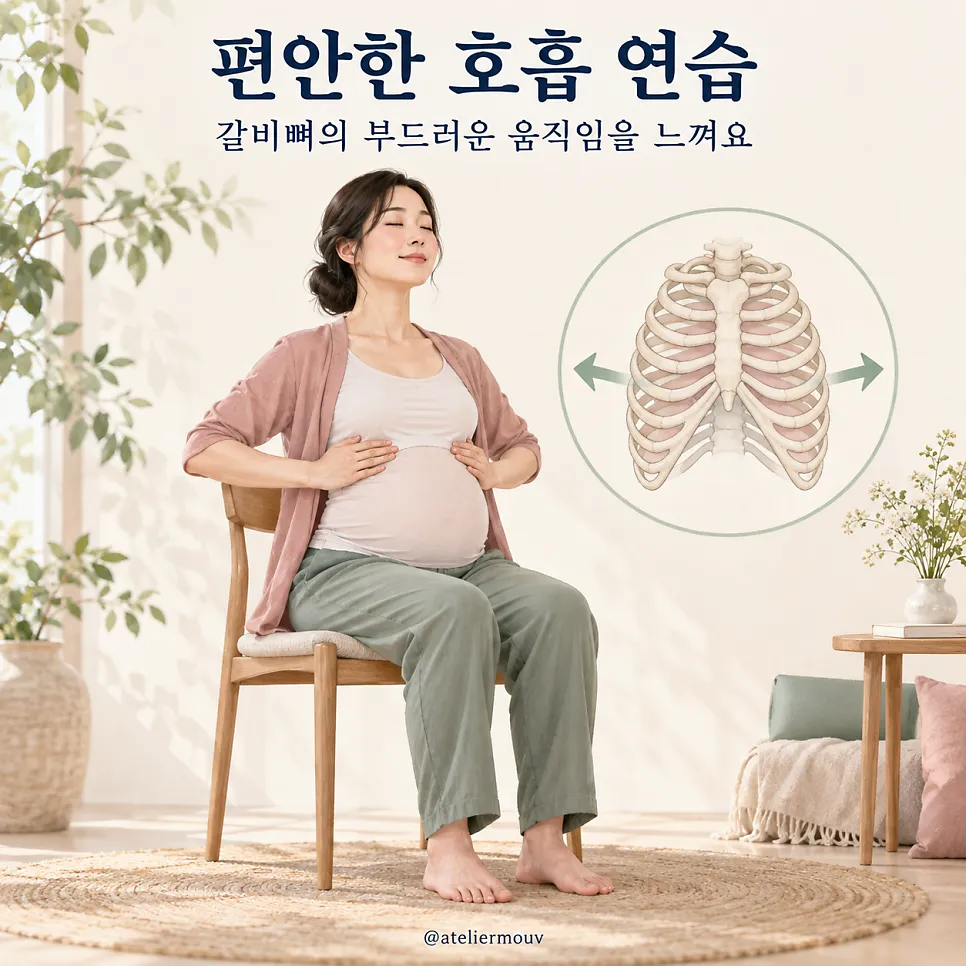
Second, your centre of gravity moves forward. As your belly grows, the lower back arches forward and the pelvis tilts, putting load on the lower back. Breathing space shrinks too: as the uterus rises, it presses on the diaphragm and your breath becomes shallow. You need to learn to breathe into your sides and back. And the pelvic floor takes on more load. These muscles govern incontinence after birth and how quickly you recover, so they need attention during pregnancy as well.
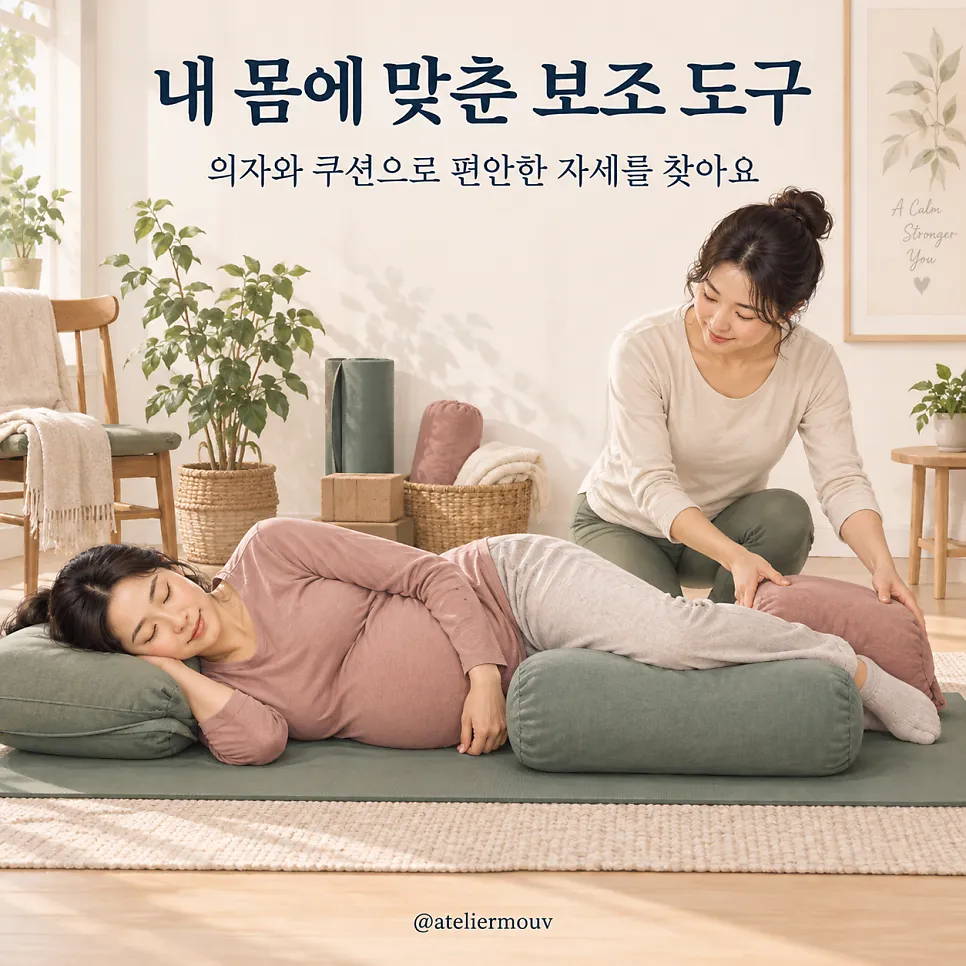
Third, the heart and blood vessels change. Blood volume increases and resting heart rate rises, and from mid-pregnancy onward lying flat on your back for long can compress a major blood vessel and make you dizzy. That is why both the WHO (2020) and ACOG (2020) advise avoiding exercise lying flat on your back after the first trimester. These changes differ between the first, second and third trimesters, and differ from person to person even at the same week.
The limits of group prenatal yoga
Group prenatal yoga is pitched at the “average pregnant woman”. Your body changes from week to week, but an instructor may find it hard to check each member’s changes by week in every class. Inevitably, classes end with “if it feels like too much, rest and rejoin”. Pain in loosened joints is hard to notice in the moment, and you only realise you overdid it the next day when your pelvis hurts.
There is another point. Deep muscles you can’t see, like the pelvic floor, are easier for pregnant women to learn to work in a private lesson than in a group class. The pelvic floor training that Cochrane (2020) found effective also assumes women “were taught how to contract the muscles correctly”.
What changes in 1:1 prenatal yoga
- Your week and condition are checked every session. I listen to how you feel today, where it hurts and what your doctor has advised, and plan that day’s session around it.
- Movements are limited according to your condition and week. Lying face down, deep twists, pressure on the abdomen, and lying flat on your back for long after the first trimester are left out depending on your week.
- You learn to connect the pelvic floor with your breath. Becoming aware of how the pelvic floor moves as you breathe out is the heart of prenatal practice.
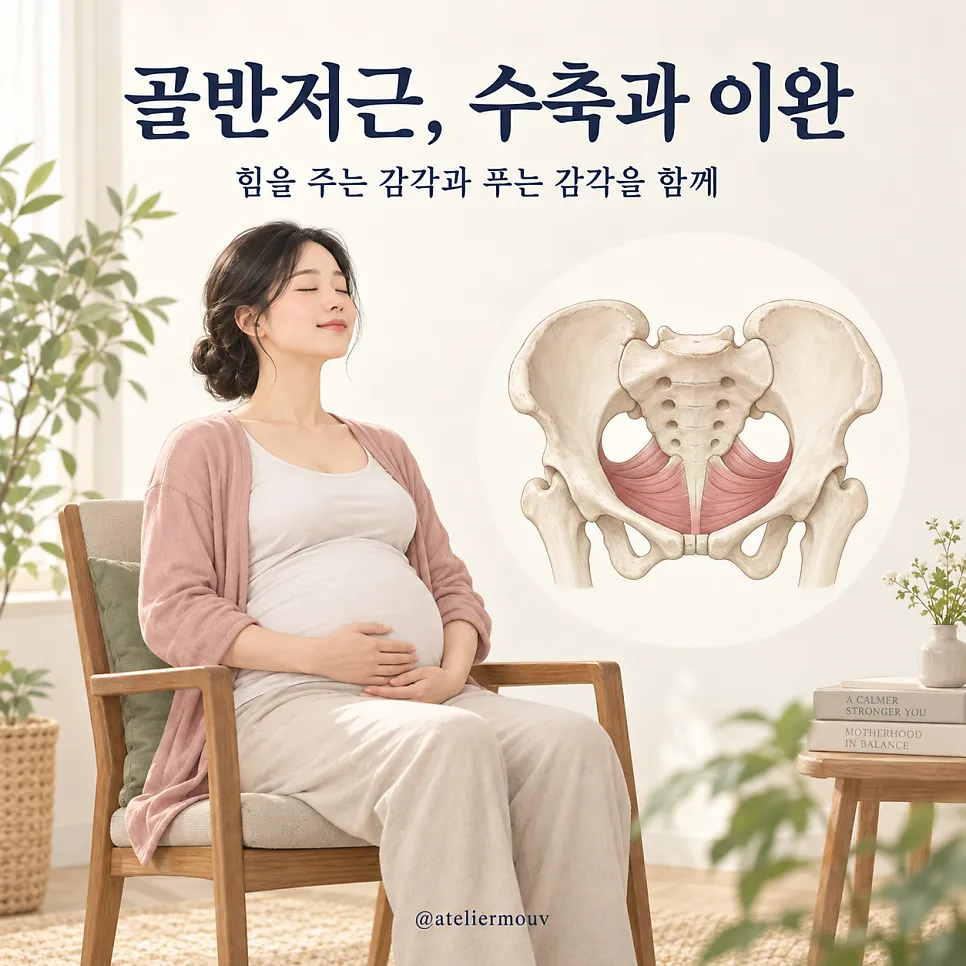
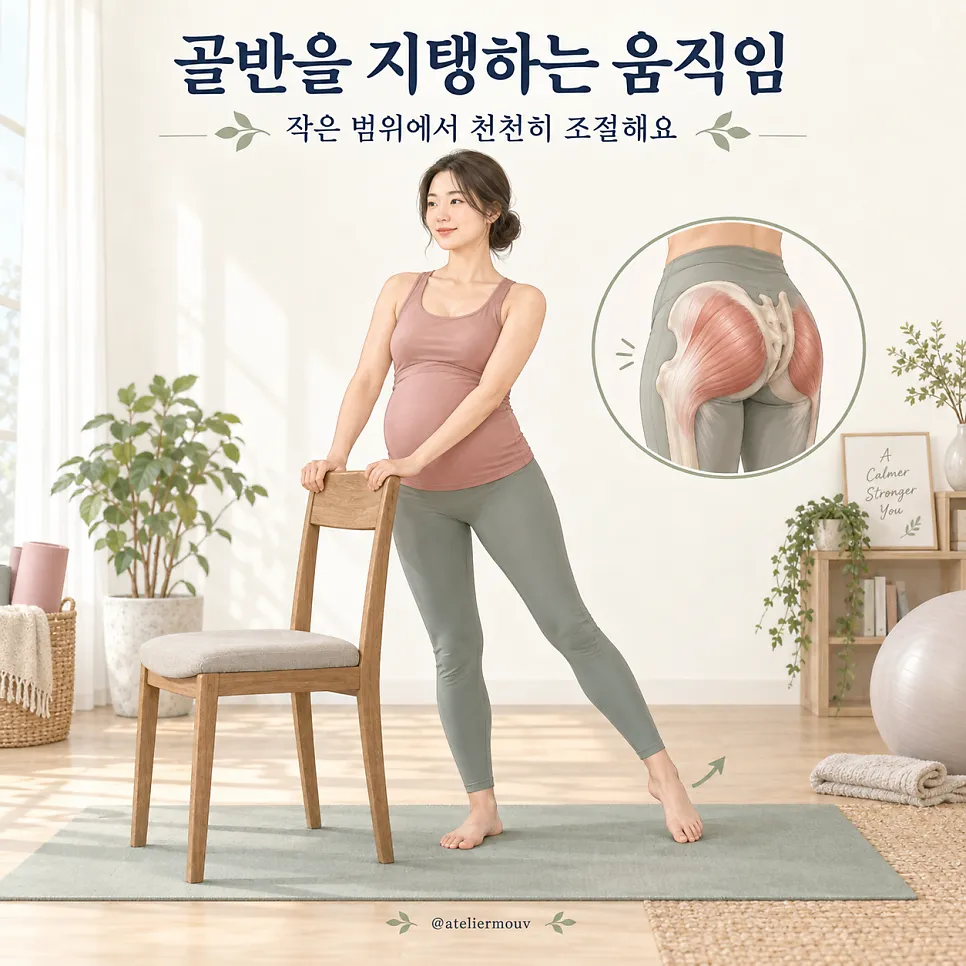
- You learn to breathe into your back and sides, which is easy to miss when the focus is only on poses. Instead of the compressed diaphragm, you practise breathing into the sides and back of the ribcage.
- Sessions centre on pelvic stabilisation. Rather than stretching joints that are already loose, we build the muscles that support them.
- Strength is built steadily. For the final event, the birth itself, we raise lower-body strength and breathing endurance in step with your week. Finding an intensity that doesn’t overdo it, every session, is the instructor’s job.
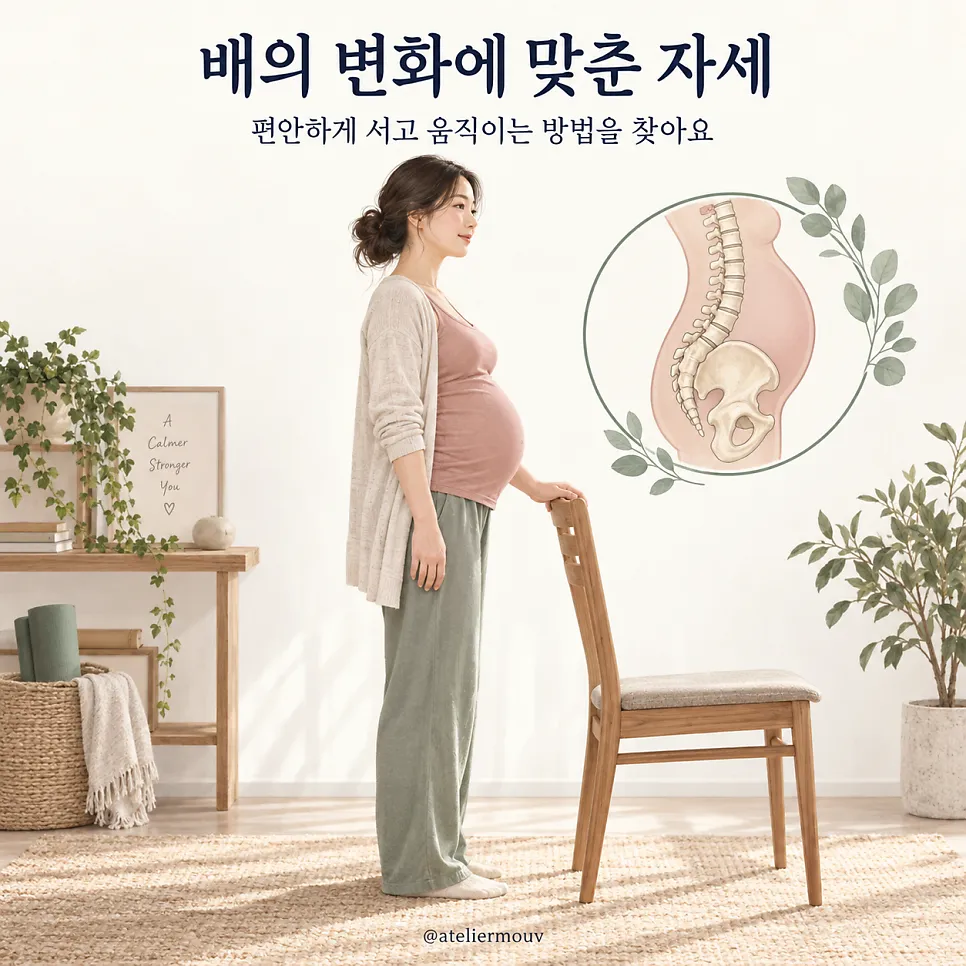
After birth, we set the direction and sequence of exercise to help the separated abdominal muscles and weakened pelvic floor recover. How instructors approach a new mother’s body can differ from one to another. So it is especially worth trying sessions with several instructors, and putting real time and effort into recovering your body through exercise after birth.
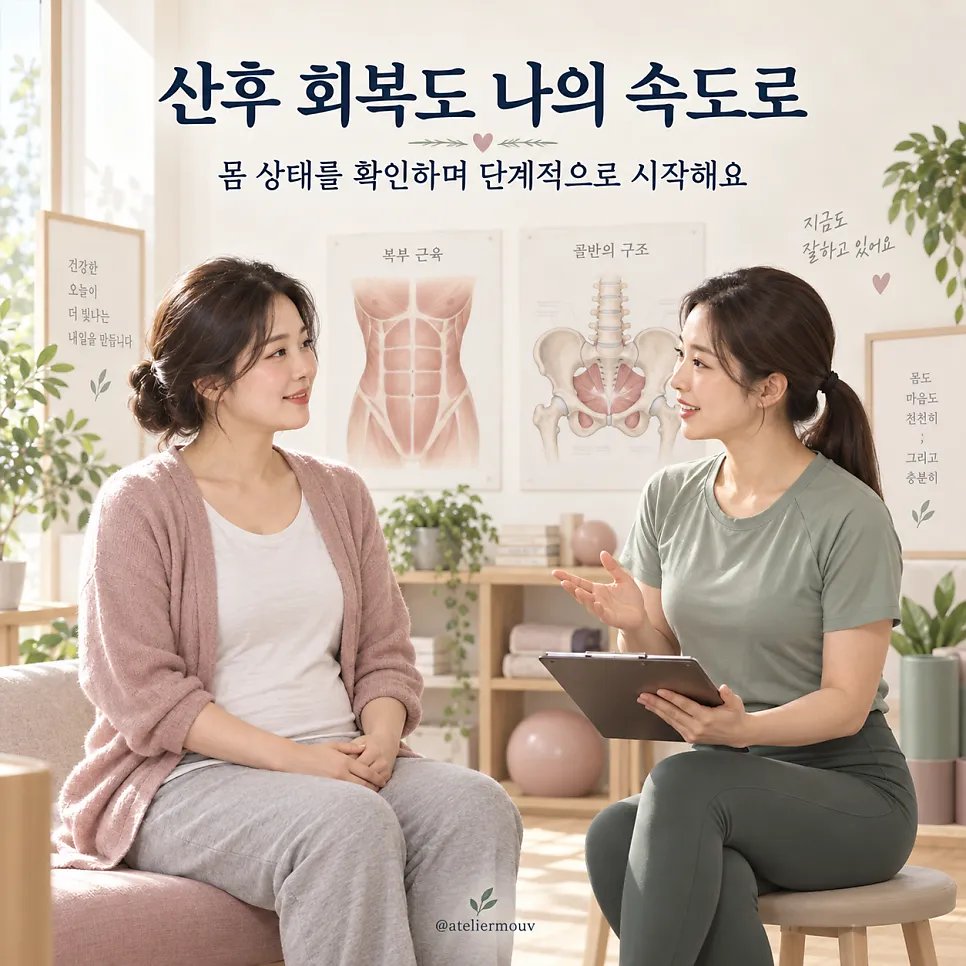
The Atelier, Mouv approach
Atelier, Mouv in Seocho has worked with many prenatal and postnatal members, in 1:1 sessions and in groups, and that experience has taught me a lot. Many of those who chose yoga came because they were struggling with a body that was stiffening and movement that felt harder. So I build programmes that flow from stretching and yoga, which create breath and space and help calm body and mind, to Pilates, which stabilises the area around the pelvis. This is also a time when you may be sensitive to what’s around you, and in a private space you can exercise comfortably while your body is changing.

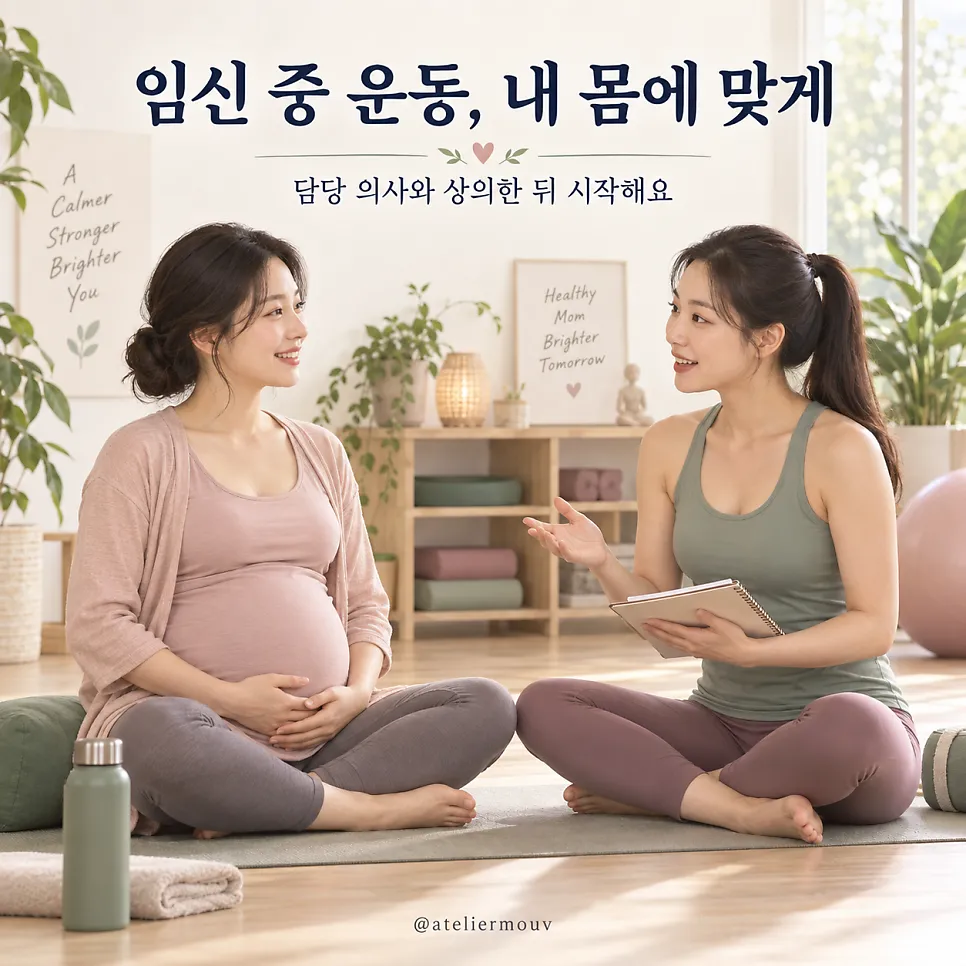
At Atelier, Mouv, your first visit starts with a movement consultation, and we then move slowly into exercise and stretching according to your condition. Please talk to your doctor before starting exercise during pregnancy. If your doctor has given you any precautions, they are built directly into how your sessions are planned.
In closing
Your fitness during pregnancy shapes the day of the birth and the two years that follow. And the benefit comes not from “how much” but from “what suits your body”. Checking a body that changes every week, every week, and going through it together: that is why prenatal yoga should be 1:1.
References
- American College of Obstetricians and Gynecologists. Physical Activity and Exercise During Pregnancy and the Postpartum Period. ACOG Committee Opinion No. 804. Obstet Gynecol 2020;135(4):e178–e188. https://www.acog.org/clinical/clinical-guidance/committee-opinion/articles/2020/04/physical-activity-and-exercise-during-pregnancy-and-the-postpartum-period
- Bull FC, et al. World Health Organization 2020 guidelines on physical activity and sedentary behaviour. Br J Sports Med 2020;54(24):1451–1462. https://pubmed.ncbi.nlm.nih.gov/33239350/
- Woodley SJ, Lawrenson P, Boyle R, et al. Pelvic floor muscle training for preventing and treating urinary and faecal incontinence in antenatal and postnatal women. Cochrane Database Syst Rev 2020;5:CD007471. https://www.cochranelibrary.com/cdsr/doi/10.1002/14651858.CD007471.pub4/full
- Villar-Alises O, Martinez-Miranda P, Martinez-Calderon J. Prenatal Yoga-Based Interventions May Improve Mental Health during Pregnancy: An Overview of Systematic Reviews with Meta-Analysis. Int J Environ Res Public Health 2023;20(2):1556. https://www.ncbi.nlm.nih.gov/pmc/articles/PMC9863076/
- The Effect of Yoga on Anxiety, Depression, and Stress in the Course of Pregnancy Period: A Meta-analysis Study. Int J Yoga 2025. https://pmc.ncbi.nlm.nih.gov/articles/PMC12931650/