Starting Yoga in Your 40s and 50s: Why It Should Be 1:1 (Part 2)
Many people start exercising thinking they should at least do some stretching, then stop after a few sessions because their joints hurt.
It isn’t a lack of willpower. A body past 40 needs a different approach, and most group classes find it hard to reflect that difference, because members of every age, each with different aches, exercise together in the same class.
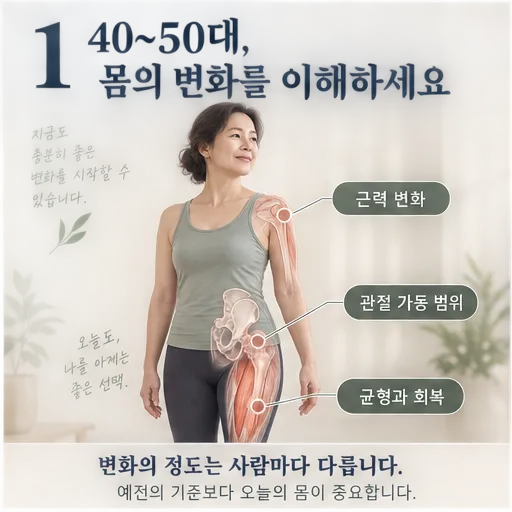
What changes in the body after 40
According to Harvard Health (2016), muscle mass falls by 3–5% every decade after 30, and the decline speeds up after 50. And it isn’t only muscle.
The range of motion in your joints gradually narrows. Hips, shoulders and ankles no longer move the way they used to. With the right mindset, you think that if you practise moving you’ll manage the hard poses again and feel less tired afterwards, so you train hard. But when you force a movement your body can’t yet do, or move more than usual, you end up exercising on weakened muscles, and sports injuries you never expected follow.
Recovery after exercise slows down and movement gets sluggish. That leads to further muscle loss and lost motivation. Balance also declines: the fine control in your ankles and hips weakens, and standing on one leg gets wobbly. A weaker sense of balance is directly linked to falls.
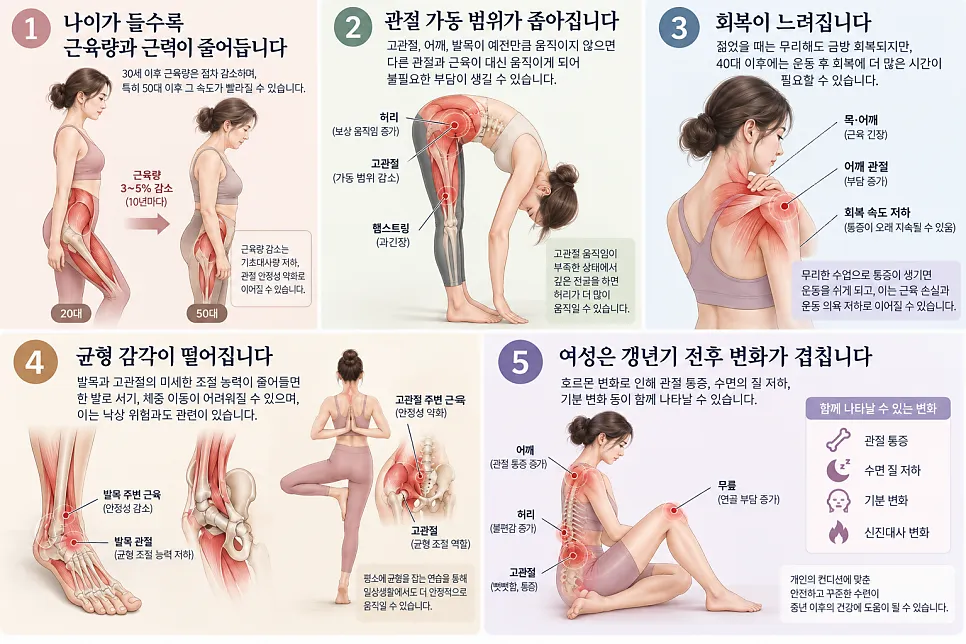
For women, the changes around menopause overlap with all this. Hormonal shifts bring joint pain, poorer sleep and mood changes along with them.
Why people get hurt in group yoga
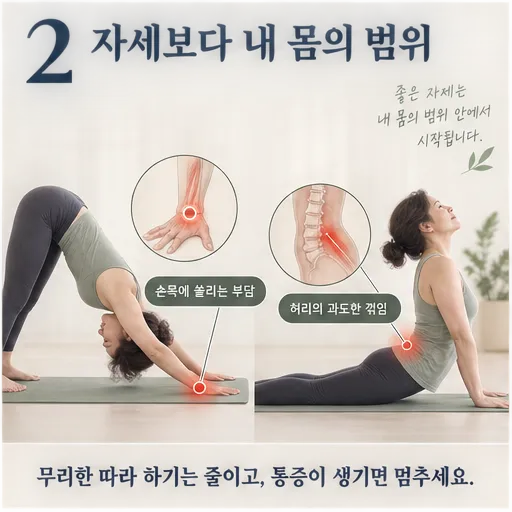
Group classes are paced for the average, and that average is usually people in their 20s and 30s. Your wrists take your body weight in downward dog, your knees collapse inward in warrior pose, and in backbends only your lower back bends. The instructor says “stay within your own range”, but the problem is that you don’t know where your range ends.
The bigger problem is psychological. When everyone around you can do a pose and you can’t, you push too hard. Most injuries in midlife start right there.
What changes in 1:1 yoga
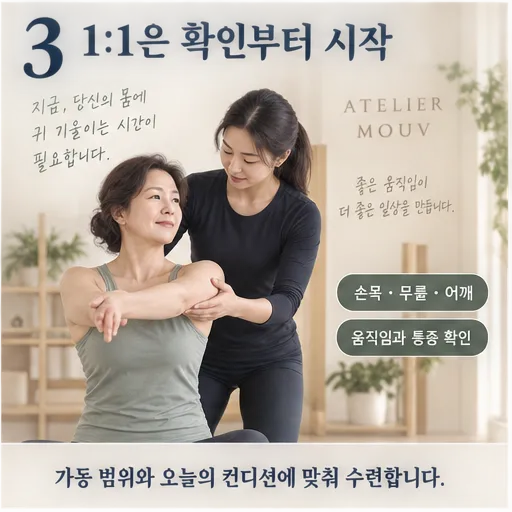
A 1:1 session is fitted to your joints today, not to the average.
- Checking the joints comes first. We check the range of motion and any pain in the wrists, knees and shoulders, and decide which directions to avoid.
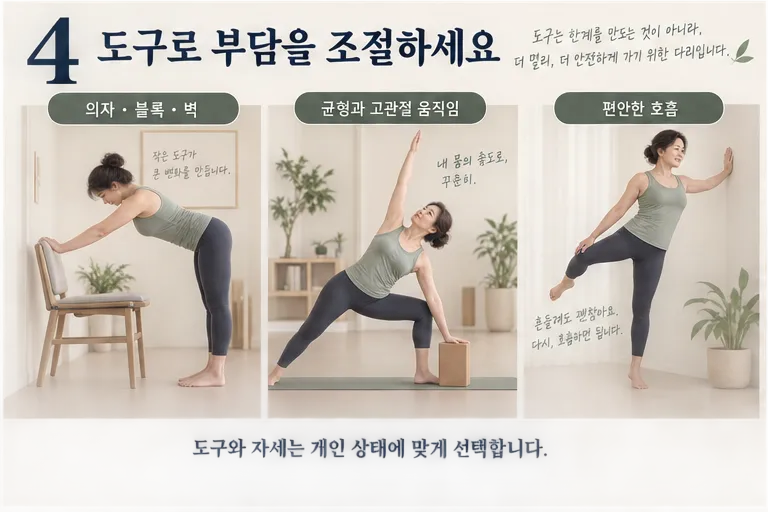
- We use props. Blocks, straps, a chair, the wall. In a class for people in their 20s they are “aids”, but in a 1:1 session in midlife they are standard equipment. If your wrists are weak, you do downward dog on your fists or forearms; if your knees are weak, you use a chair.
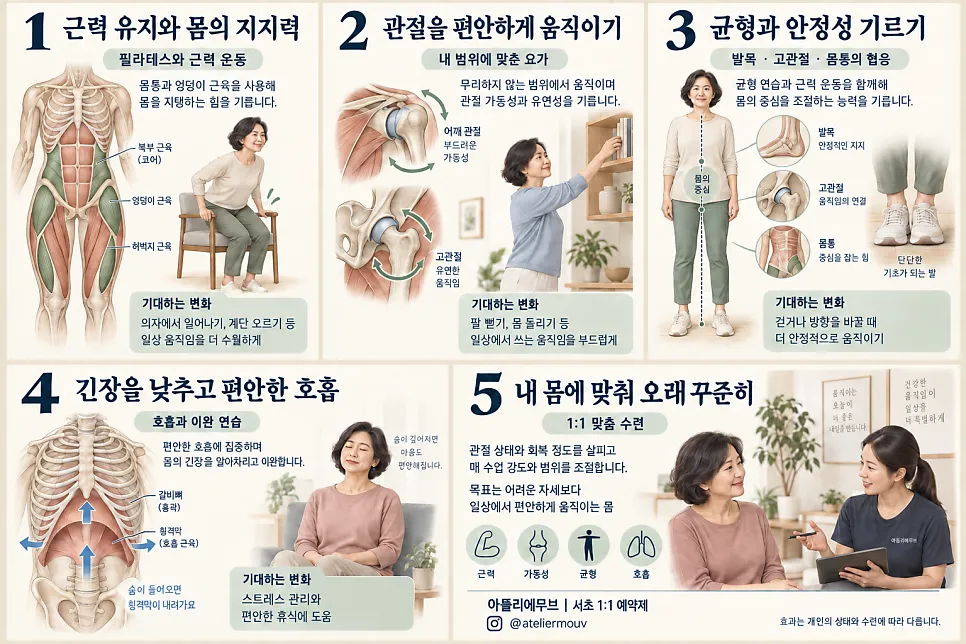
- Balance and hip mobility are restored first. These matter more for everyday function than flexibility does.
- Breath-centred practice is included. Around menopause, breath-centred practice may help with sleep and mood.
- Intensity is adjusted every session. If you slept badly or your knee is swollen, that day’s session changes.
The Atelier, Mouv approach
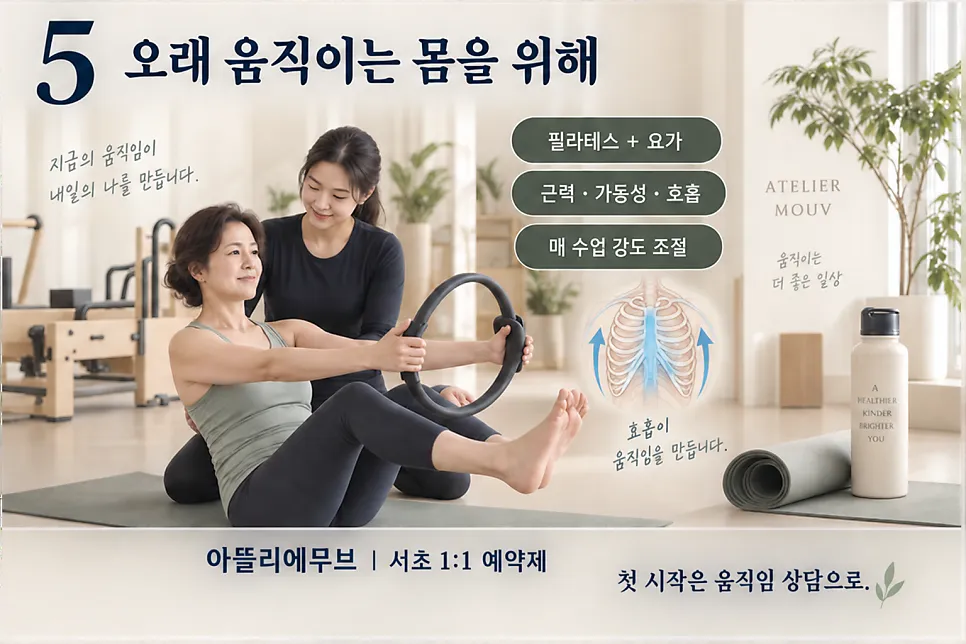
Atelier, Mouv in Seocho combines Pilates and yoga in private 1:1 sessions. A midlife body can’t simply be loosened up. We rebuild lost muscle with Pilates and open stiff joints with yoga, and an instructor trained in both methods puts together an efficient programme. Because this is a time when recovery is slower, the instructor’s job is to find, every session, an intensity that gets results without overdoing it.
Your first visit is a movement consultation. We start once we’ve checked where you’re stiff and where you’ve weakened.
In closing
Exercise after 40 isn’t about becoming “someone who’s good at it” but about becoming “someone who is still moving ten years from now”. Getting past that starting point without an injury: that is why 1:1 matters.