Low on Stamina? Learn How to Move Before You Train Harder
One day, two flights of stairs leave you out of breath, and after a whole weekend of rest you are tired again on Monday morning.
It used to be fine to overdo it for a day and recover after a good night’s sleep. Then at some point recovery began to take days, and your body feels heavy even though you have not done anything particularly hard. You think you should exercise, but when it comes to starting, questions come up.
“Should I sign up for a gym?” “Which suits me better, yoga or Pilates?” “Is it okay to start exercising when my stamina is this low?”
These are things I hear often while teaching private 1:1 Pilates and yoga in Seocho-dong.

I do not tell these people to increase their workload first. When you feel your stamina has dropped, what you need may not be harder exercise, but a process of learning the movement that suits your body right now.
Today I will talk about why stamina drops, what to check when you start exercising, and what you need to learn to keep exercising over the long term.
1. Signs from your body that stamina has dropped
Office workers in their 30s to 50s who spend most of the day sitting may notice changes like these.
You get out of breath faster than before on stairs or uphill paths. Your lower back and shoulders tire easily after sitting for a long time. By the afternoon your posture collapses and your concentration drops. Even after resting well on the weekend, your body does not feel refreshed. When you start exercising, you tire quickly and find it hard to keep going.
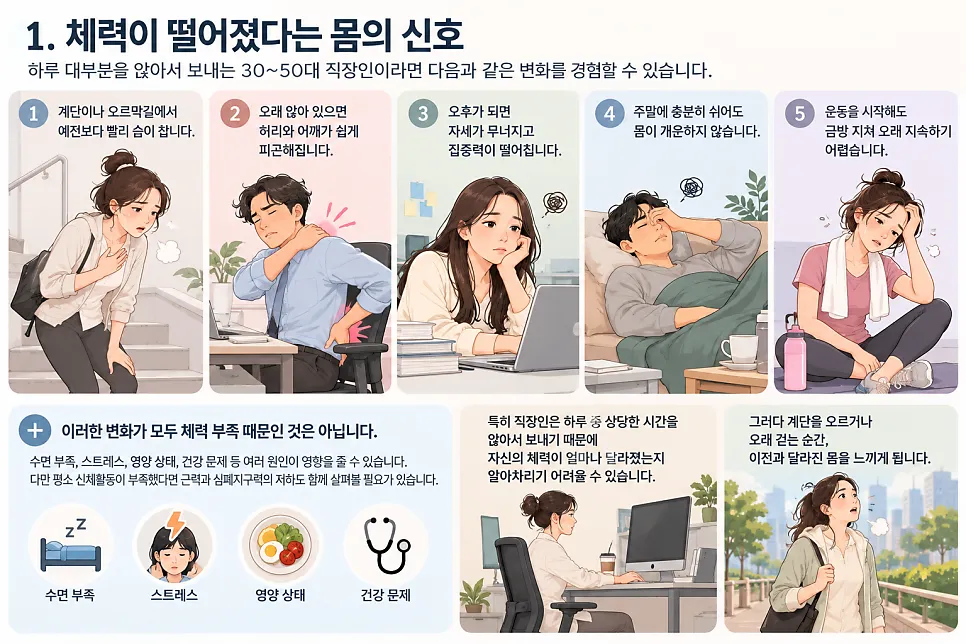
Not all of these changes come from a lack of stamina. Poor sleep, stress, nutrition and health conditions can all play a part. Still, if you have not been physically active, it is worth looking at a decline in muscle strength and cardiorespiratory endurance as well.
Office workers spend a great deal of time sitting, so it can be hard to notice how much their stamina has changed. Then, while climbing stairs or walking for a long time, they feel that their body is different from before.
2. Why doesn’t stamina come back even when you rest?
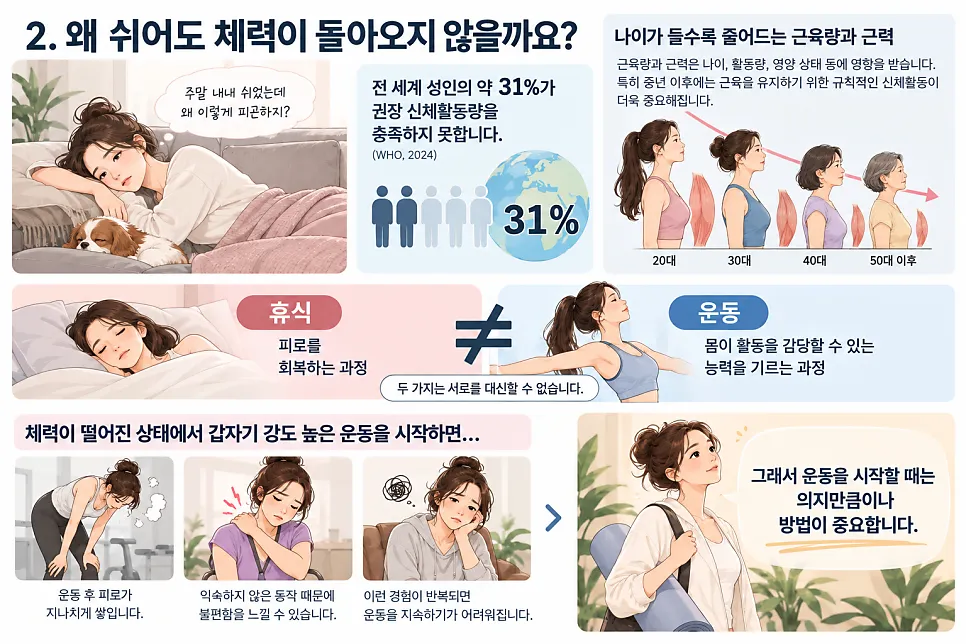
When you are tired, resting usually comes first. But if daily life is still tiring after enough rest, it is worth looking at your level of physical activity, separately from rest.
According to data published by the World Health Organization (WHO) in 2024, about 31% of adults worldwide did not meet the recommended level of physical activity in 2022. That means nearly one in three adults is not moving as much as is recommended for health. World Health Organization
Changes in muscle that come with age are also worth considering. Muscle mass and strength are affected by age, activity level, nutrition and more. After middle age in particular, regular physical activity to maintain muscle becomes increasingly important.
Rest is the process of recovering from fatigue, and exercise is the process of building the ability to activate your body.
Stamina improves when rest and exercise go together. So while resting enough, you need to gradually increase movement that suits your body.
But what happens if you suddenly start high-intensity exercise when your stamina is low? You feel worn out after exercising, or you strain your muscles and joints with movements you rarely do. When this keeps happening, you stop wanting to exercise, you start to feel you must just endure it, and you stop wanting to go. That is why, when you start exercising, the method matters as much as willpower if you want to keep going.
3. Exercise is not just something to copy, but a skill to learn
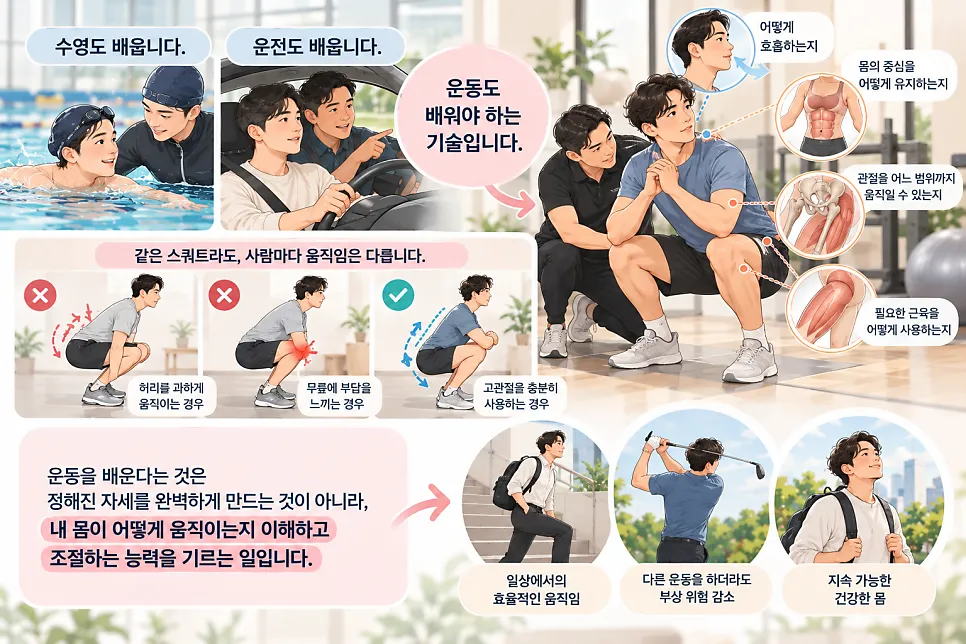
We learn to swim and we learn to drive. Because no one can do it well from the start, we learn the basic principles and practice them repeatedly.
I think exercise is the same. Exercising is not simple repetition. It is a process of finding out how you breathe, how you keep your center, how far your joints can move, and how you use the muscles you need.
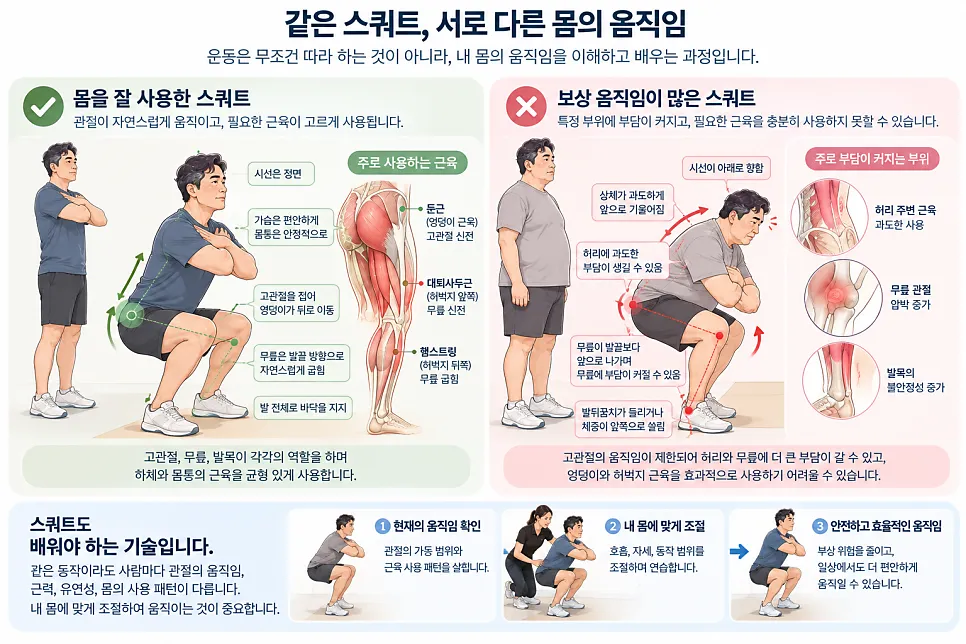
For example, even when doing the same squat, everyone moves differently. Some people use their hips well, while others move their lower back too much or feel strain in their knees. Even for the same exercise, the method and the muscles to use differ from person to person. Watching a movement and copying it is different from adjusting it to your own body as you move.
Learning to exercise does not mean perfecting a fixed posture. It means building the ability to understand and control how your own body moves.
If you learn exercise this way, the risk of injury drops considerably and you can move efficiently, both in daily life and in any other exercise you do.
4. When stamina is low, how should you start Pilates and yoga?
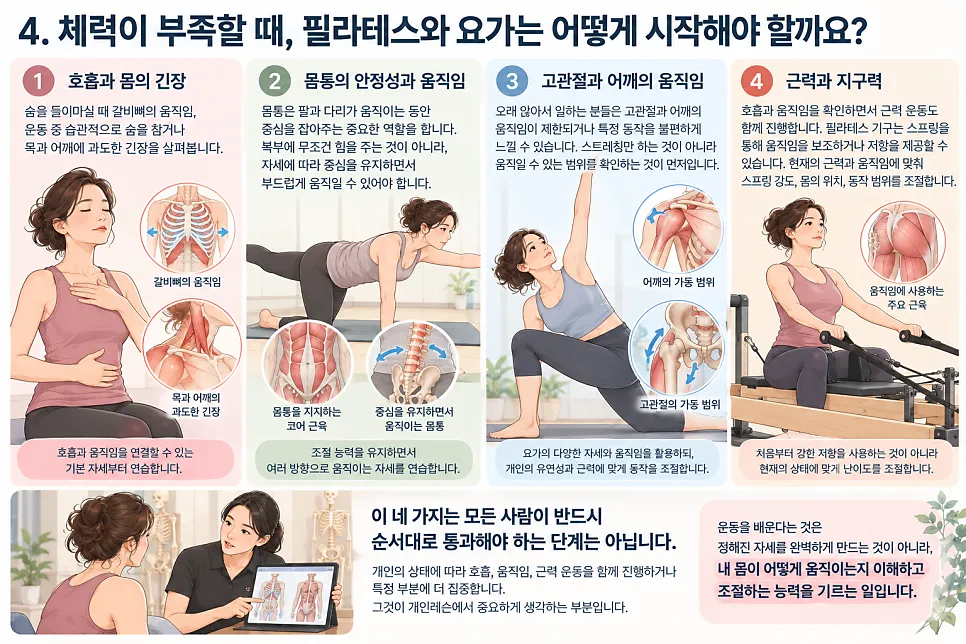
At Atelier, Mouv, when we look at the body of someone starting to exercise, we check four main things.
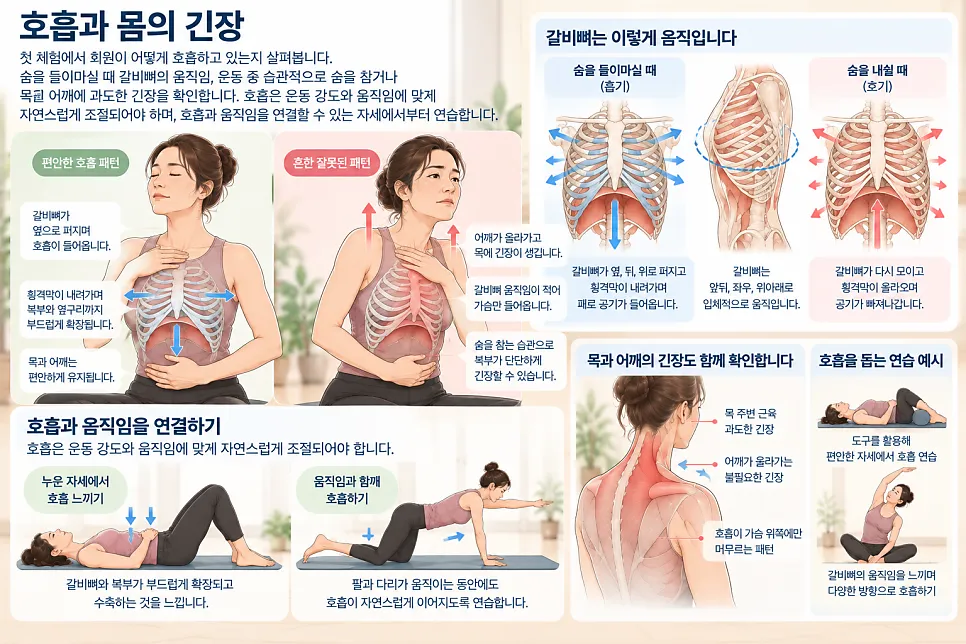
① Breathing and body tension In the first trial session, we look at how the member is breathing. We check the movement of the ribs as they breathe in, whether they habitually hold their breath during exercise, and whether there is excessive tension in the neck and shoulders. Breathing should adjust naturally to the intensity and the movement. We start by practicing in positions where breath and movement can be connected.
② Stability and movement of the trunk The trunk plays an important role in keeping your center while the arms and legs move. Using the trunk stably does not mean tightening the abdomen hard or keeping the lower back still during exercise. Depending on the position, you should be able to shift your weight and move smoothly while holding the posture. In Pilates, we practice positions that move in many directions while keeping control.
③ Movement of the hips and shoulders People who work sitting for long hours may find their hip and shoulder movement limited, or find certain movements uncomfortable. Rather than only stretching, the first step is to check the range in which you can move. We use the various postures and movements of yoga, adjusting them to each person’s flexibility and strength.
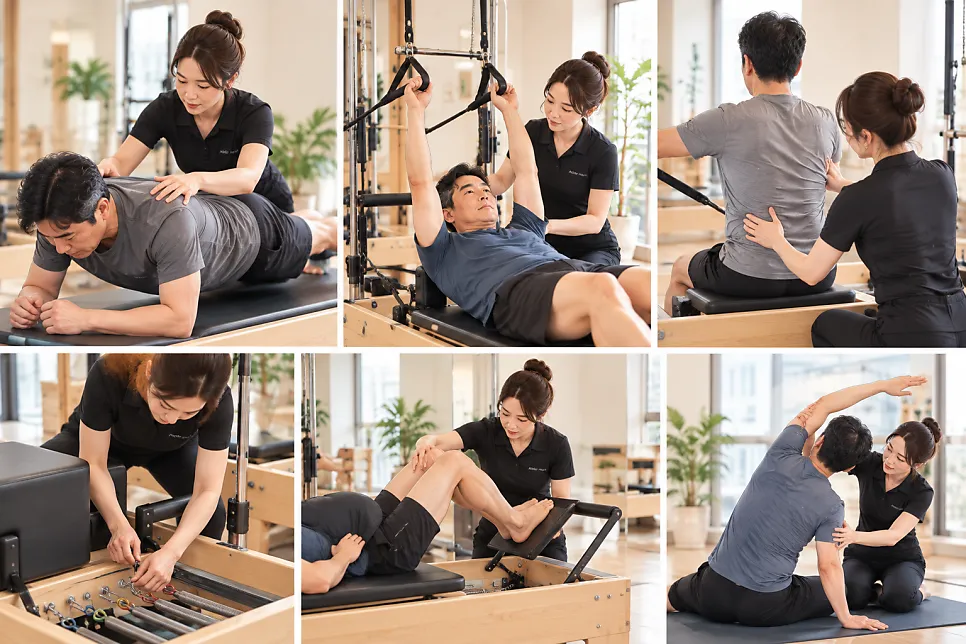
④ Strength and endurance While checking breathing and movement, we also do strength work. Pilates equipment such as the reformer and the cadillac can assist movement or provide resistance through springs. Even on the same equipment, the difficulty changes depending on the spring strength, body position and range of motion you set. So we do not begin with strong resistance, but adjust to your current strength and movement.
These four are not steps that everyone must go through in order. Depending on the individual, breathing, movement and strength work are done together, or one area gets more focus.
5. Why private 1:1 Pilates and yoga lessons in Seocho make sense
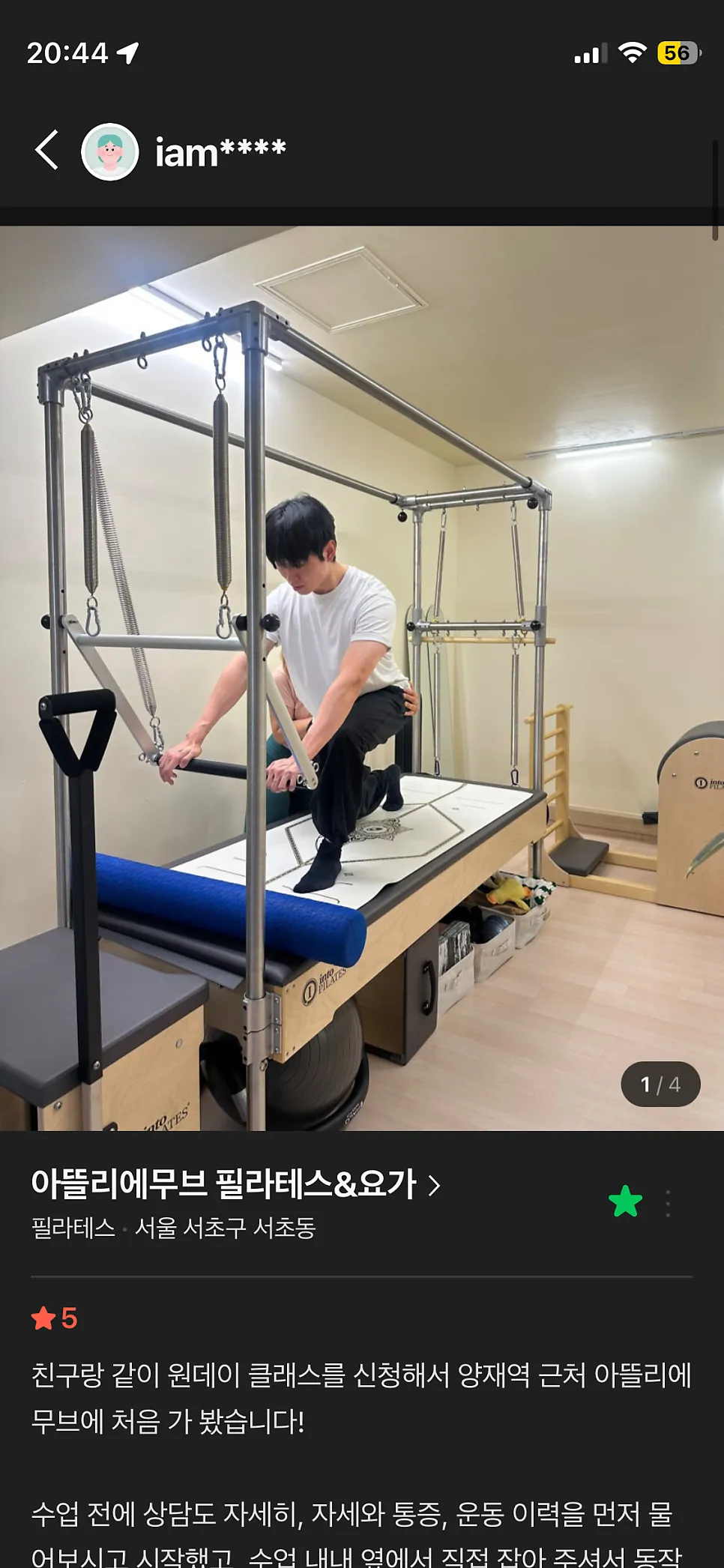
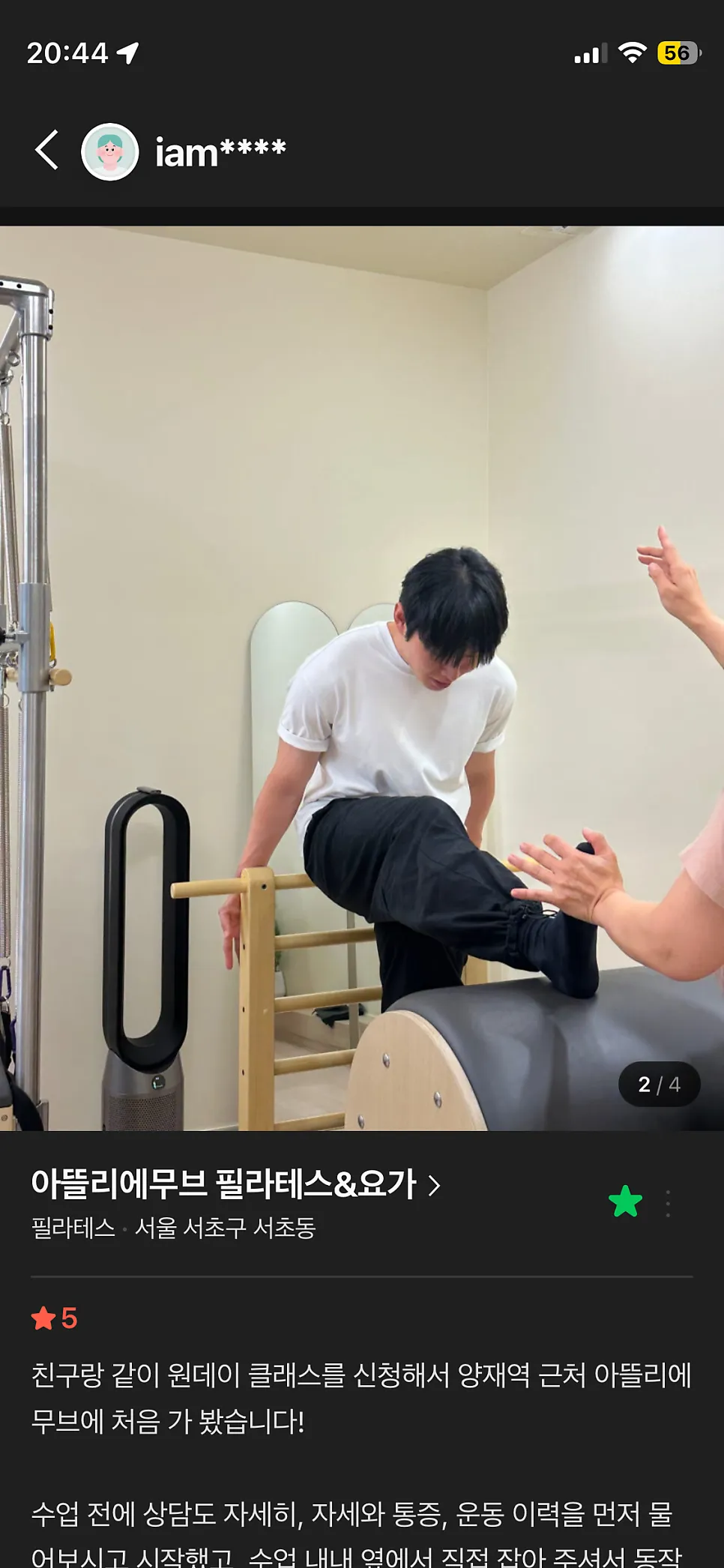
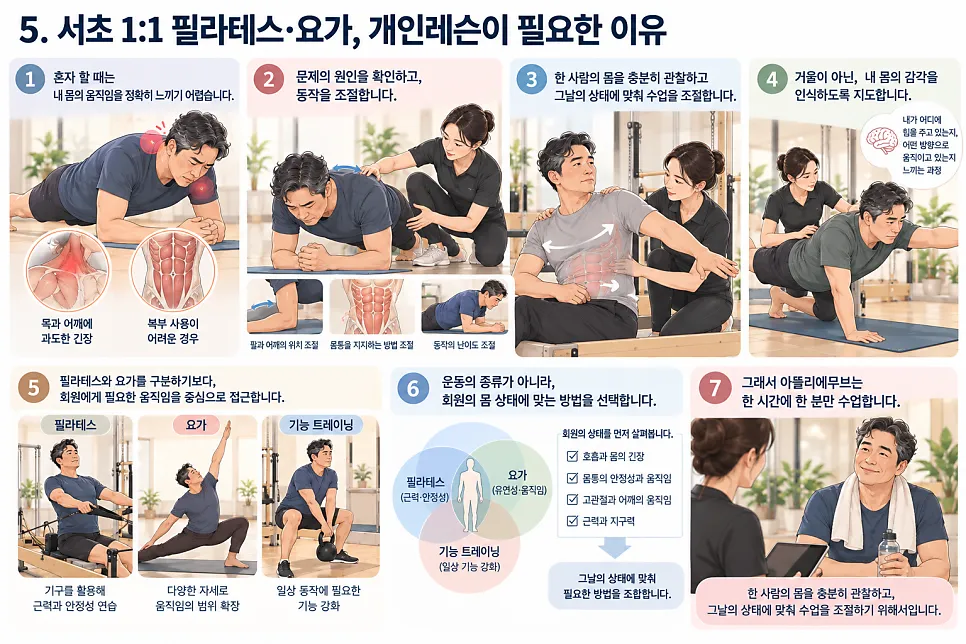
People with little exercise experience or low stamina may find it hard to feel exactly how they move. For example, if your neck and shoulders tire before your abdomen in a plank, simply holding it longer may not be the right answer. You can change the position of your arms and shoulders, adjust how you support your trunk, and try again with an easier version of the movement. These adjustments differ from person to person.
This is also why Atelier, Mouv admits only one person per hour,
to observe one person’s body thoroughly, adjust the lesson to that day’s condition, and keep the focus on exercise as much as possible.
At Atelier, Mouv, we approach Pilates and yoga not as separate exercises, but around the movement each member needs. Some days we use yoga to widen the range of movement, and other days we practice strength and stability on Pilates equipment. When needed, we also add functional training. We do not decide the type of exercise first; we look at the member’s body and then choose the right method.
During lessons, we also guide you to notice the sensations in your own body rather than relying on a mirror. Finding out where you are putting effort and which way you are moving is also an important part of learning to exercise.
6. How many times a week should you exercise when stamina is low?
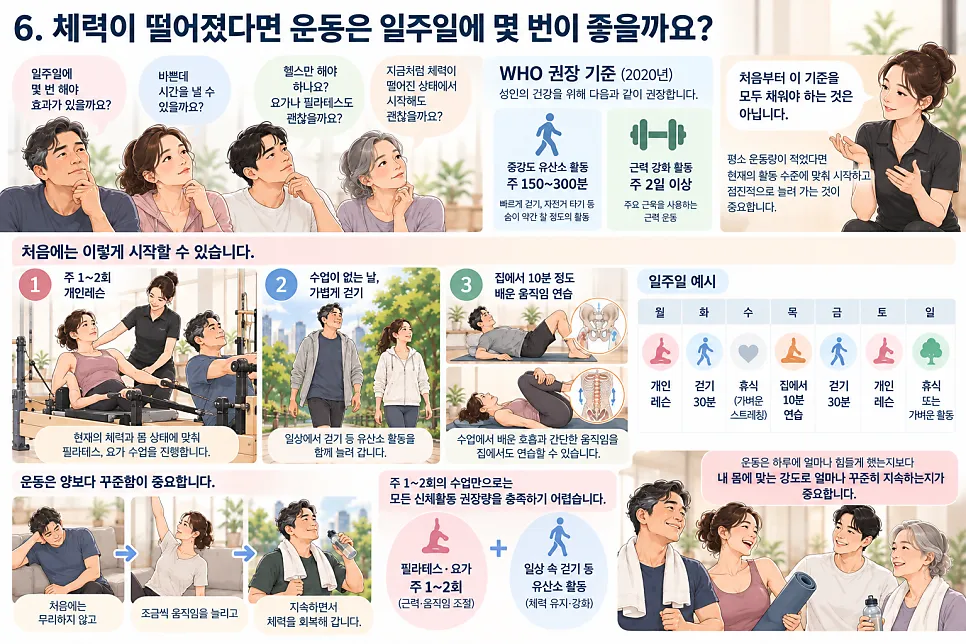
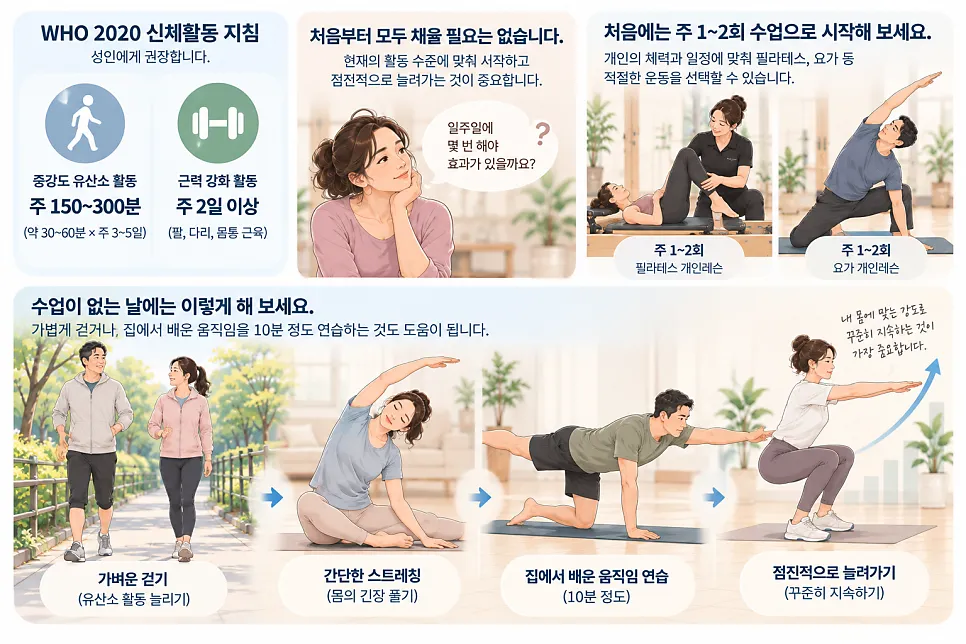
This is a question we often get when people start. “How many times a week do I need to exercise to see results?” The WHO’s 2020 physical activity guidelines recommend that adults do 150 to 300 minutes of moderate-intensity aerobic activity per week and muscle-strengthening activities on 2 or more days. But someone who has not exercised much does not need to meet all of these targets from the start. What matters is to begin at your current activity level and increase gradually. If you are just starting, you can consider 1 to 2 lessons a week, depending on your stamina and schedule.
On days without a lesson, you can walk lightly or practice the movements you learned for about 10 minutes at home. However, 1 to 2 lessons a week alone do not meet the full recommended amount of physical activity, so it is good to also increase aerobic activity such as walking in daily life.
What matters in exercise is not how hard you worked on a given day, but how consistently you keep going at an intensity that suits your body.
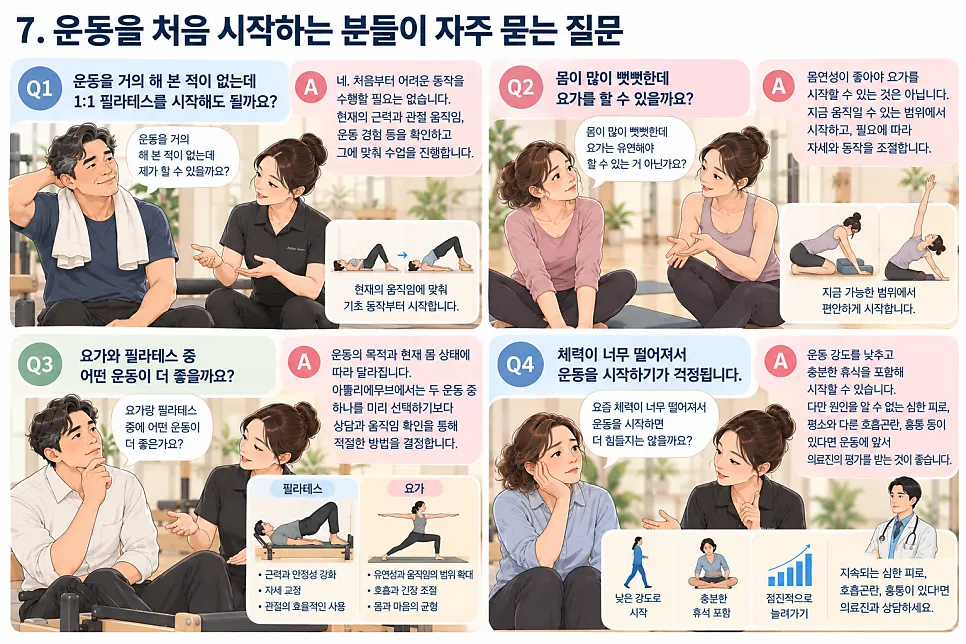
7. Questions people often ask when starting to exercise
Q. I have hardly ever exercised. Can I start private 1:1 Pilates? Yes. You do not need to perform difficult movements from the start. We check your current strength, joint movement and exercise experience, and run the lesson accordingly.
Q. My body is very stiff. Can I do yoga? You do not need to be flexible to start yoga. Start within the range you can move, and adjust postures and movements as needed.
Q. Which is better, yoga or Pilates? It depends on your goal and your current condition. At Atelier, Mouv, rather than choosing one in advance, we decide on the right method through a consultation and a check of your movement.
Q. My stamina is so low that I am worried about starting. You can start at a lower intensity with plenty of rest built in. However, if you have severe fatigue with no known cause, unusual shortness of breath, chest pain or the like, it is best to be assessed by a healthcare professional before exercising.
8. Seocho yoga and Pilates: start with the exercise that suits your body
When you feel your stamina has dropped, it is not that you do not know you should exercise. When you actually try to start, you do not know which exercise, at what intensity, or from where.
For some people strength work is needed, and for others practice in controlling movement comes first. Even for the same person, the right intensity and method change with their condition.
Since 2021, Atelier, Mouv has taught private 1:1 Pilates and yoga lessons in Seocho-dong, observing each member’s movement. We teach one person per hour, and the director personally handles everything from consultation to instruction.
You do not need to move well from the start. You can begin by finding out what condition your body is in now.
If you are visiting for the first time, we do a consultation and a trial lesson together. The first trial at Atelier, Mouv is not simply a time to follow Pilates movements. It is a process of checking your current condition and finding out in which direction it would be good to start exercising.
In the first consultation and trial, we look at the following together.
- We check your usual habits, exercise experience and any areas that have felt uncomfortable.
- We observe your breathing, posture and joint movement.
- We teach a Pilates and yoga lesson matched to your current stamina and movement.
- We advise on what kind of exercise to start, and at what intensity.
Stamina does not come back just by waiting, but it can change when you learn. In your first lesson, find out where your body needs to start.
Start your first movement that suits your body at Atelier, Mouv.
References
- World Health Organization (WHO), Physical activity, 2024
- Volpi E, Nazemi R, Fujita S. Muscle tissue changes with aging, 2004
- Bull FC et al. WHO 2020 guidelines on physical activity and sedentary behaviour
This article is written to provide general exercise information and does not replace a diagnosis or treatment from a healthcare professional.