Nine Hours at a Desk: Why Office Workers Need Private 1:1 Yoga (Part 1)
You went to a yoga class after work, and when it ended your neck and shoulders still felt tight?
That happens because it is hard to find the level of movement that suits you. A body that sits for long hours breaks down in a particular order, and group classes are often built around a theme, which doesn’t always fit.
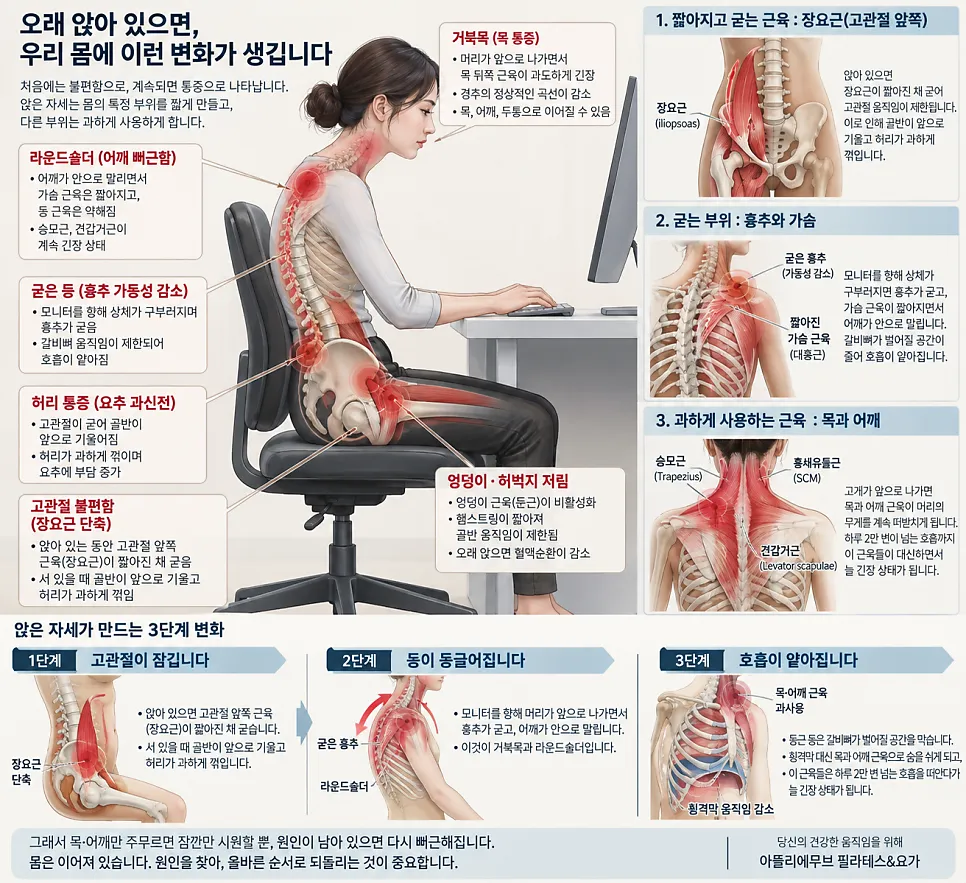
How an office worker’s body breaks down
The World Health Organization (WHO, 2020) reports that one in four adults does not get the recommended amount of physical activity. Desk workers are at the centre of that group.
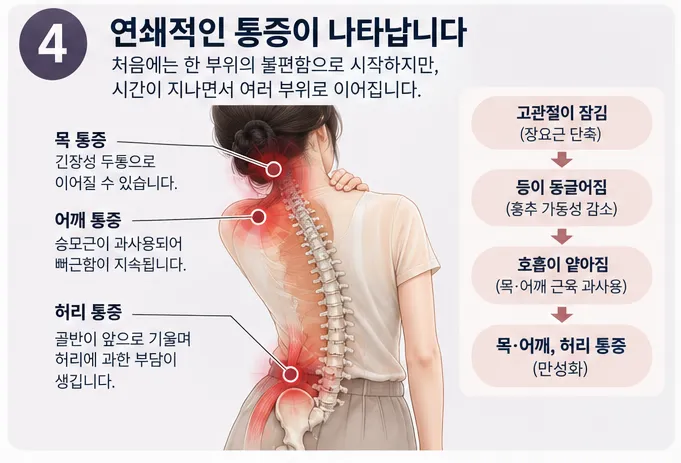
When sitting becomes your default posture, the body changes in three stages.
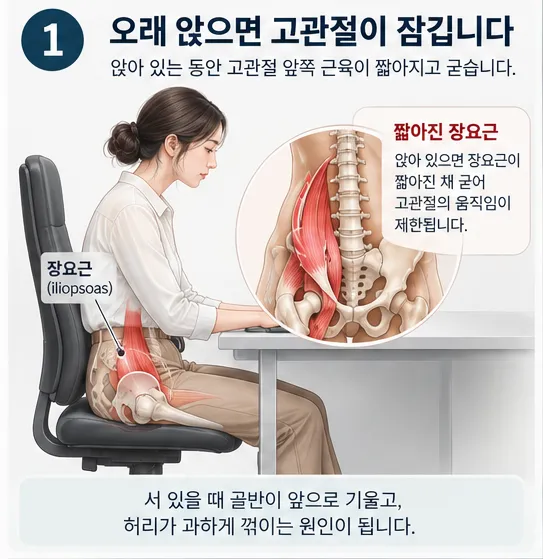
Stage 1: the hips lock. While you sit, the muscle at the front of the hip (the iliopsoas) stays shortened and stiffens. When you stand up, the pelvis tips forward and the lower back arches too much.
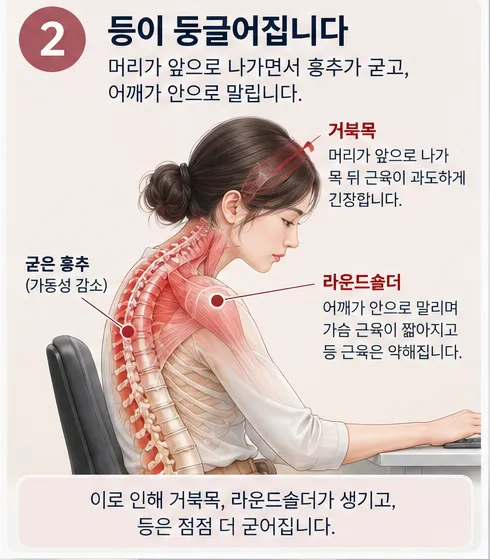
Stage 2: the upper back rounds. As your head drifts forward toward the monitor, the thoracic spine stiffens and the shoulders roll inward. This is what we call forward head posture and rounded shoulders.
Stage 3: breathing gets shallow. A rounded back leaves the ribs no room to expand. Instead of the diaphragm, you start breathing with the muscles of your neck and shoulders, and after taking on more than 20,000 breaths a day, those muscles stay tense all the time.
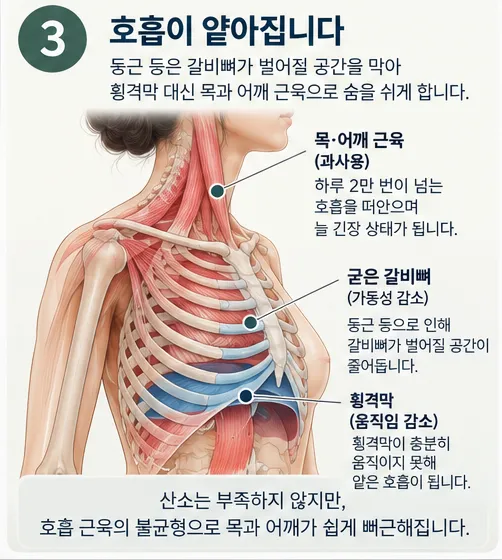
The problem is that you only feel stage 3, the stiff neck and shoulders. The cause sits back at stage 1, in the hips, yet most people just rub their shoulders.
Why a group class doesn’t release it
Group classes come with a theme: “today is a backbend sequence”, “today is hip openers”. That has nothing to do with whether your body is at stage 1 or stage 3 right now. And if you work on the hips while they are tight and stiff, the pelvis doesn’t move and the lower back does the work instead. Rather than getting more flexible, you build a habit of using your lower back over and over. That is why so many people say “my back hurts more after yoga”.
One instructor cannot watch the pelvic tilt of ten or more people at once. So guidance in a group class stops at “don’t push yourself”.
What is different in a private 1:1 session
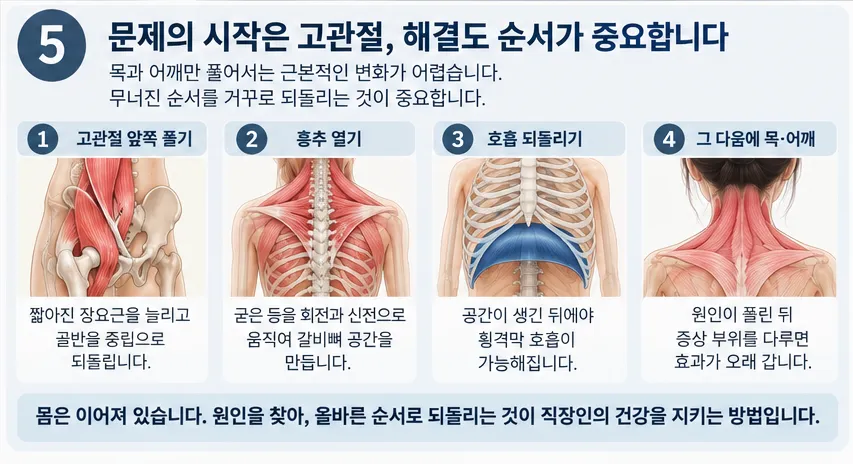
A 1:1 session undoes the breakdown in reverse order. In the first session we check your pelvic tilt, how far your thoracic spine moves and how you breathe, and find where things got stuck. The order after that usually looks like this:
- Release the front of the hips — lengthen the shortened iliopsoas and bring the pelvis back to neutral.
- Open the thoracic spine — move the stiff upper back in four directions, left, right, forward and back, to make room for the ribs.
- Restore the breath — diaphragmatic breathing only becomes possible once that room is there.
- Then the neck and shoulders — working on the area where you feel it, after the cause has been released, makes the result last longer.
A Cochrane systematic review (2017) reported that yoga may help improve function in adults with chronic low back pain. That assumes practice adjusted to the individual body.
The Atelier, Mouv approach
At Atelier, Mouv in Seocho, the instructor designs each programme (Pilates, yoga and functional training) around the member’s body. Stiff areas are released with yoga, and what has been released is stabilised with Pilates. If you focus on only one method, releasing alone means you stiffen up again at your desk the next day, and strengthening alone means you get strong while still stiff. So each session runs like a conversation: I watch and listen to your body closely and respond with the right answers and questions.
In closing
If your neck and shoulders feel stiff, the neck and shoulders are most likely not the problem. Finding the cause and exercising along the way there: that is why office workers should practise yoga 1:1.