Why Your Lower Back Aches When You Sit: How Eight Hours at a Desk Stiffens It, Step by Step
“My back hurts when I sit, but the tests say there’s nothing wrong.”
I hear this often from desk workers who come in with a stiff lower back. Finding nothing in particular on a test doesn’t mean there is no discomfort. If you find yourself pressing a hand to your back when you stand up, or wanting to lean on the backrest every afternoon, it’s worth looking not only at your back but at the changes that have happened across your whole body during long hours of sitting.
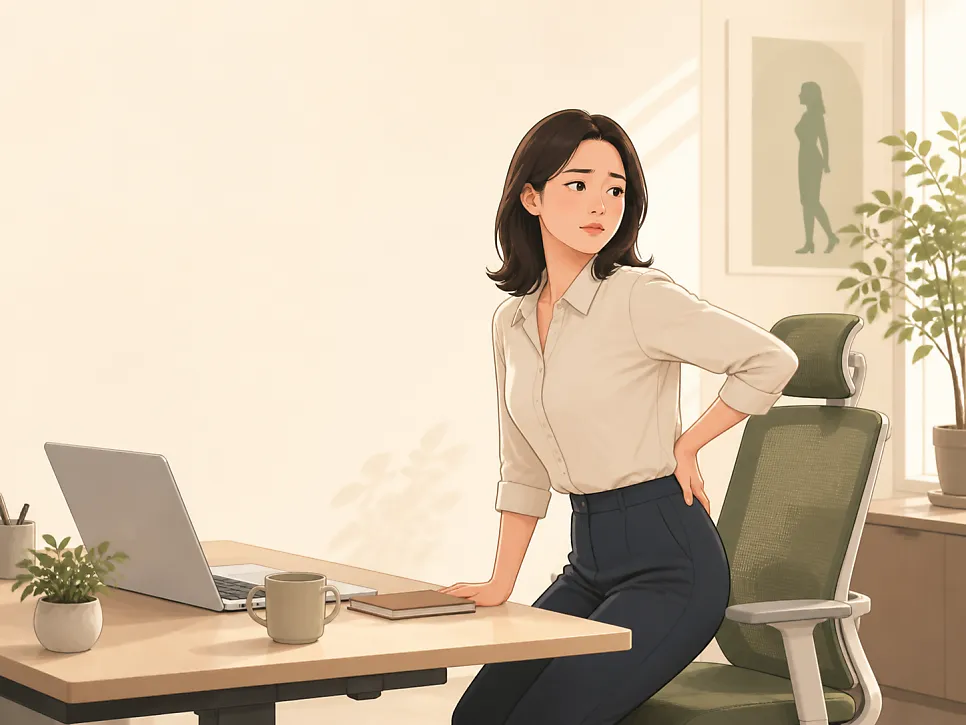
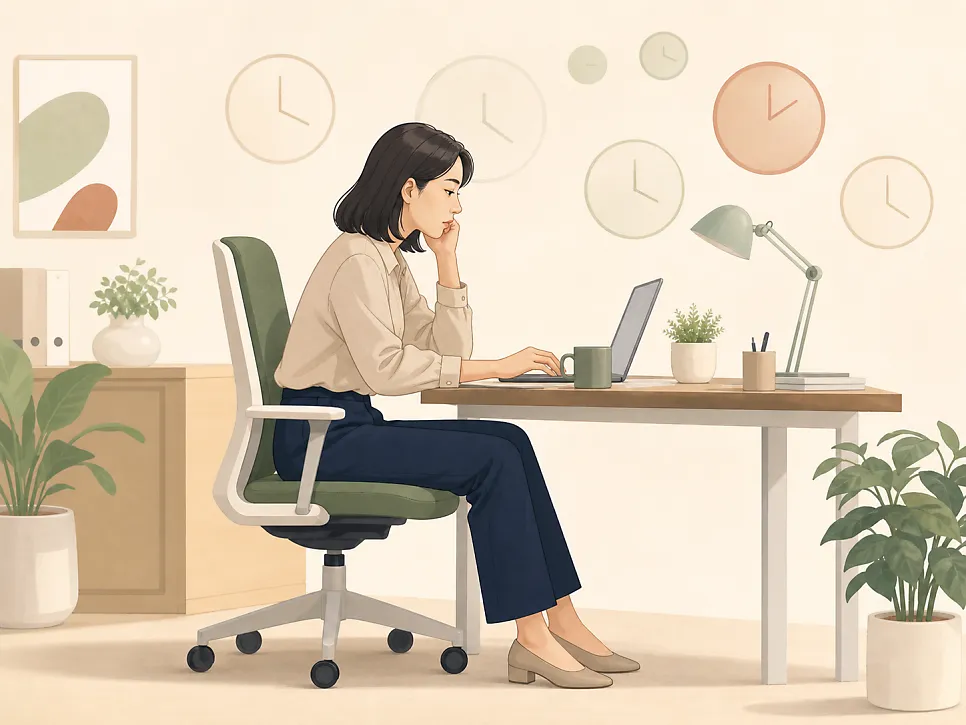
How long hours of sitting lead to back pain
1. Your glutes get slow to respond. While you sit, your glutes are pressed under your body weight and barely move. After hours without being used, they may not produce force quickly even once you stand up.
2. The front of your hips gets used to being short. Sitting keeps the pelvis and thighs folded. Hold that position for close to eight hours a day and the muscles at the front of the hip can get used to a shortened state.
3. Your pelvis and lower back move differently when you stand. If the front of the hip doesn’t fully open, the pelvis may tip forward or the lower back may arch too much as you stand up. This is why the reason your back hurts when you get up from a chair can be hard to find in the back alone.
4. Your lower back takes over other areas’ jobs. When the glutes and hips don’t do their part on time, the muscles around the lower back can tense more as you stand and walk. Repeated all day, this leaves your lower back feeling heavy and stiff by evening. Even if the discomfort shows up in your back, the starting point may not be your back.
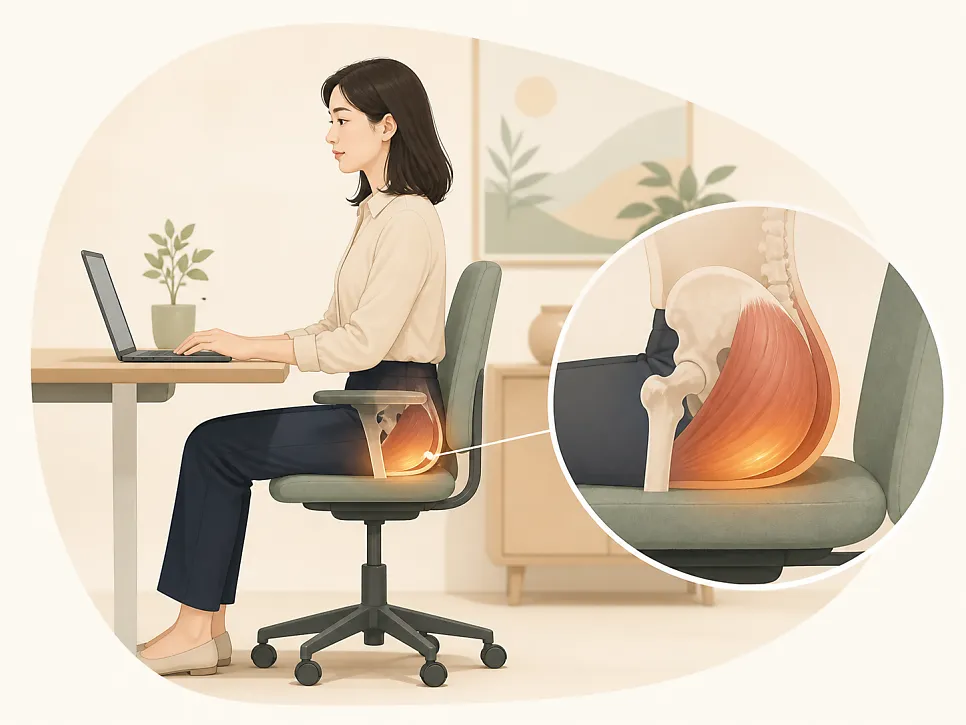
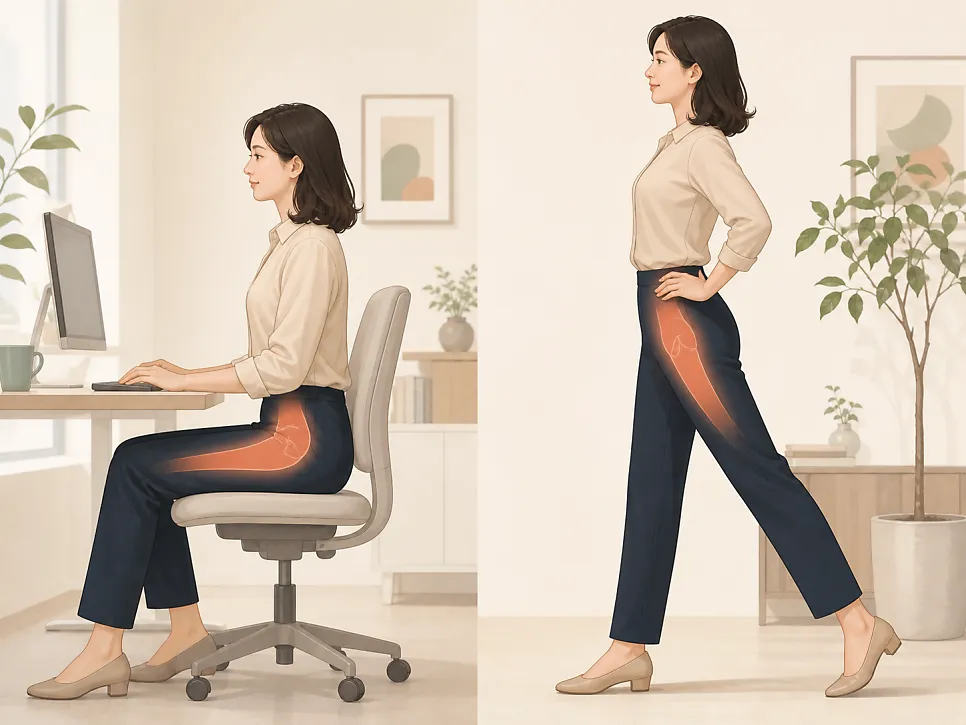
Why your back stiffens again even after stretching
Stretching only your lower back after work may feel good in the moment. But when you sit for long hours again the next day, the same process repeats from step one. While you keep stretching an already tense lower back, the shortened front of the hips and the slow-to-respond glutes can stay exactly as they were. It’s like going to bed still sore and starting the next day the same way. That’s why it helps to look at the glutes, the hips and the breath together, not just the back.
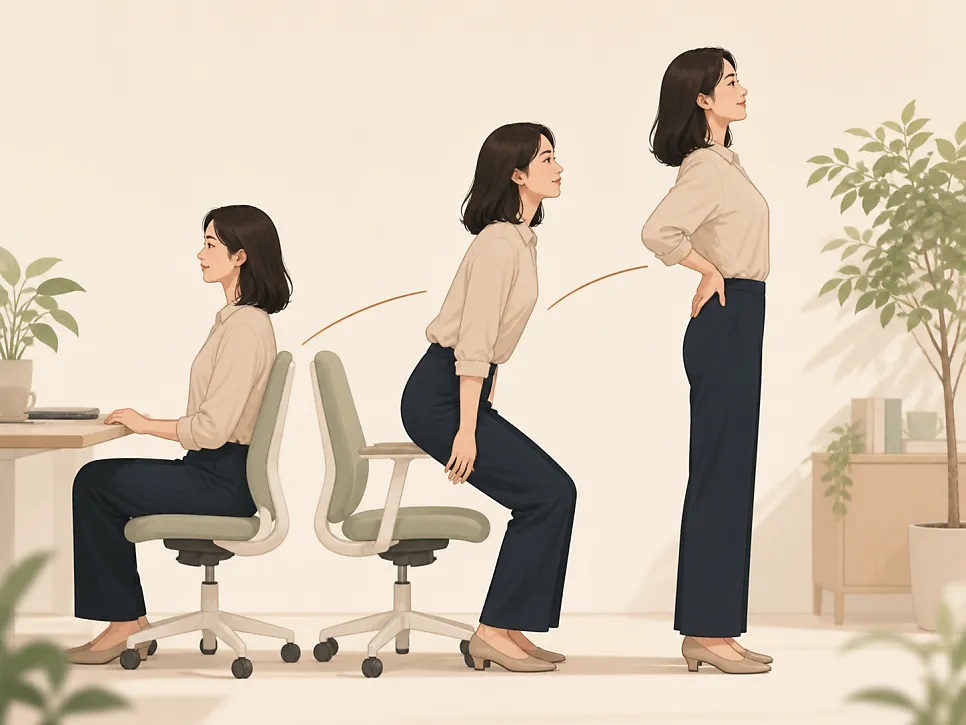
How desk-worker back stiffness tends to show up
Some people are fine in the morning or at the weekend but reach for their lower back every weekday afternoon. When they stand, their pelvis tilts forward, and when they stand on one leg, the lower back tightens before the glutes do.
On the other hand, some people sit for about the same time and stay comfortable into the evening. Often this isn’t because their posture is perfect, but because they don’t hold one position for long. What matters is not holding “one good posture” but changing position often.
Three exercises for office workers whose back hurts when they sit
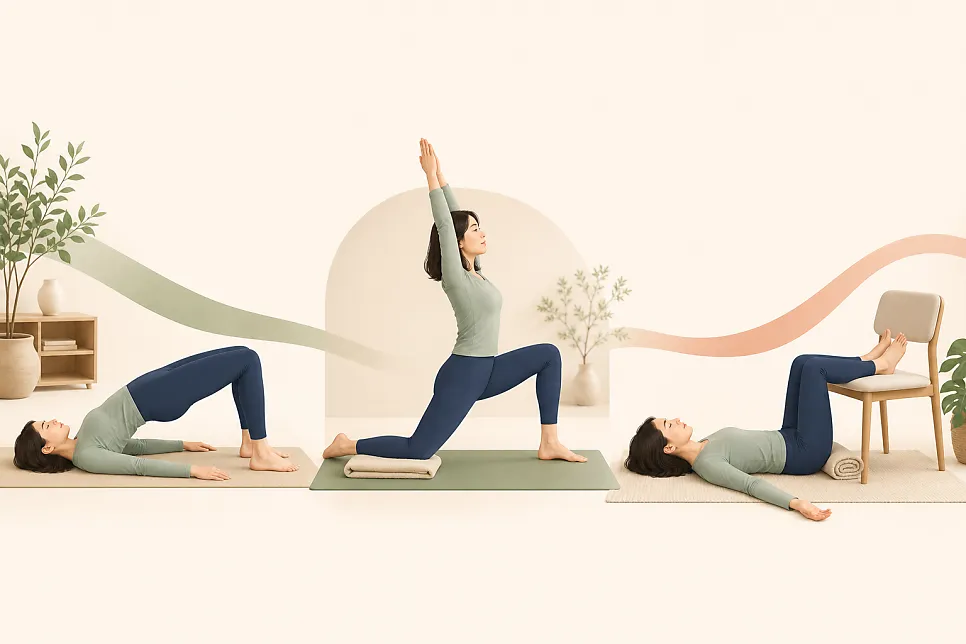
These go in order: wake up the glutes, lengthen the front of the hips, then settle the torso with the breath.
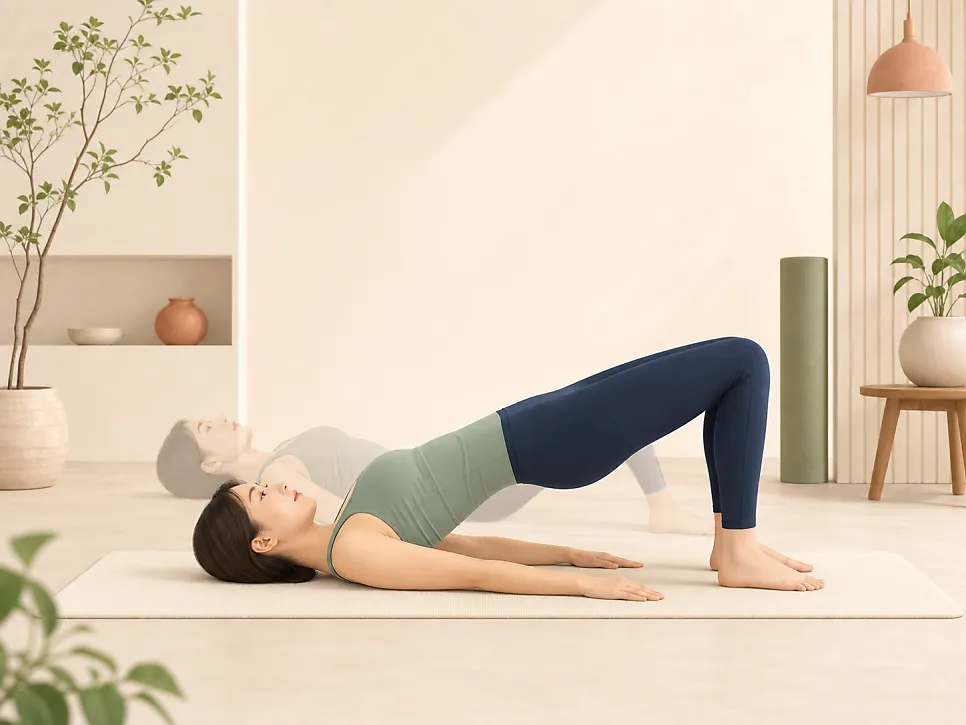
1. Bridge | Easy · 8 reps. Lie on your back with your knees bent and lift your spine off the floor one segment at a time, starting from the tailbone. Don’t push up with your lower back; check that your glutes are working. On the way down, place your back on the floor one segment at a time as well.
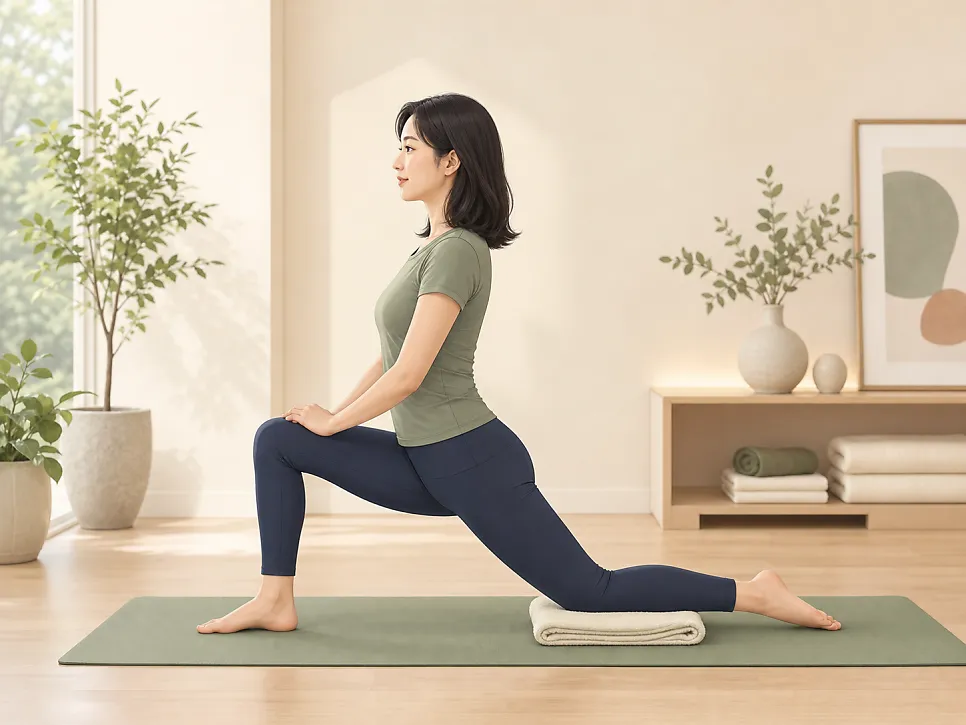
2. Low lunge (crescent pose) | Medium · 5 breaths each side. Put one knee on the floor and plant the other foot in front. With your tailbone gently tucked, slowly move your pelvis forward. Don’t overarch your lower back, and if your knee feels uncomfortable, put a towel under it.
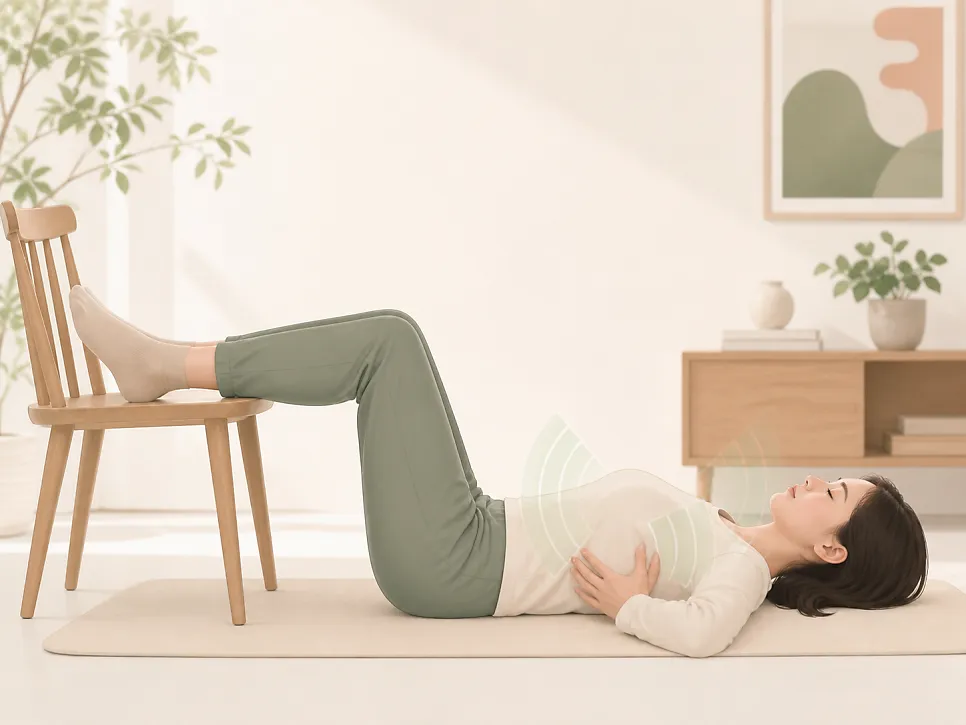
3. IAP breathing | Easy · 10 breaths. Lie down with your hips and knees bent to about 90 degrees and your calves resting on a chair. As you breathe in, find the sense of your sides widening; as you breathe out, check that your ribs come down. Keep the abdomen gently engaged in all directions, very slightly, as in belly breathing, and try to release any tension in your neck and shoulders.
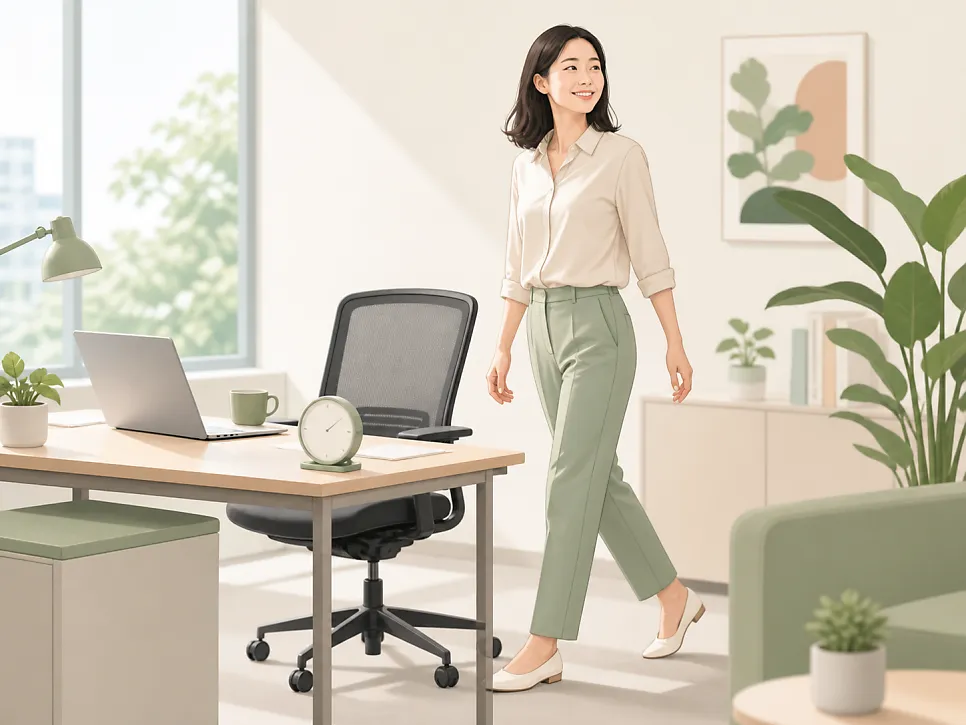
Stand up for 30 seconds every 50 minutes
You don’t even need to stretch. Just stand up for 30 seconds once every 50 minutes. The folded front of your hips opens out and your weight goes back onto your glutes.
Even the best posture can strain the body if you hold it for three hours. If long sitting gives you back pain, the habit of moving often comes before the perfect posture.
Is it just me? No.
Back discomfort is common, but the causes are not the same for everyone. According to an analysis of 2012–2021 healthcare use published in 2022 by Korea’s Health Insurance Review and Assessment Service, 11.31 million people were treated for spinal conditions in 2021, about 22% of the population.
OECD figures cited in the same report show hospital discharges for low back pain in 2020 of 110.4 per 100,000 people in Korea, against an OECD average of 66.8. These numbers show the scale of the problem; they don’t indicate the effect of any particular exercise.
※ If you are pregnant, have recently had surgery, or have pain that persists or gets worse, don’t start exercising on your own judgement; talk to your doctor first.
Atelier, Mouv is a single studio within walking distance of Gangnam and Yangjae stations. We see only one person an hour, paying close attention to how your body moves and helping you move freely in everyday life.